Interview with Fr. Jeremy Zipple, S.J., Chief Mission Officer at St. John’s College
Amid a wave of secularization in Belize, one of the bastions of faith-based education in the country, St. John’s College, has struggled to emphasize its Jesuit and religious roots among a student body with different priorities.
That is beginning to change as the college revamps its ministry programs and expands opportunities for students to deepen their spiritual lives.
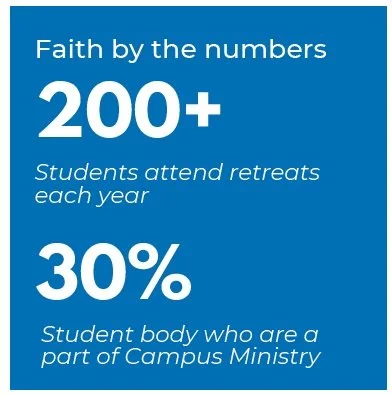
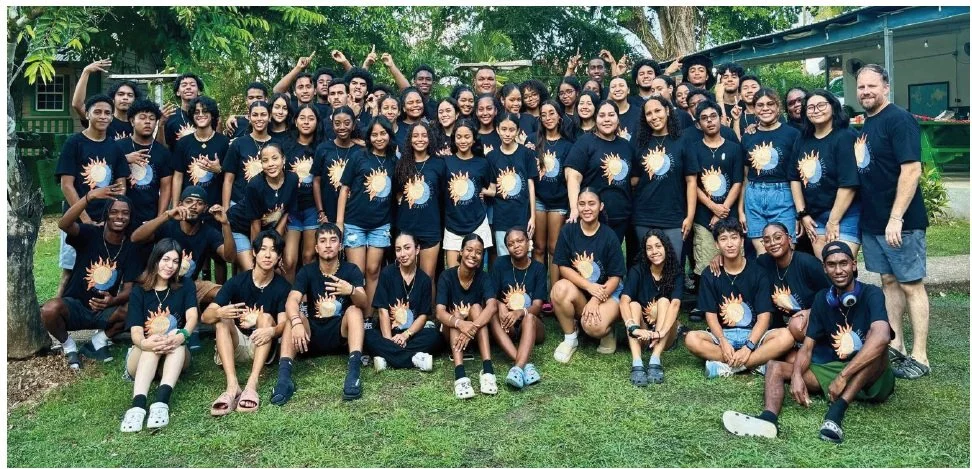
At the junior college level, St. John’s now offers four main retreats and several service immersion programs to meet the growing demand for faith development among students. Just a few years ago, only about 60 students participated in retreats; today, the programs engage more than 200 students annually.
Leading the efforts, Fr. Jeremy Zipple, S.J., the school’s chief mission officer, said the return is an important step for St. John’s — and right in time too, coinciding with the celebration of 44 years of St. John’s College and 175 years of Jesuit work in Belize.
“I think we're starting to recover that now,” Fr. Zipple said. “We have some Jesuits for whom that's important, and we've started reinvesting in the school again and re-involving ourselves.”
The faith formation efforts have been integrated into all three divisions of St. John’s, which includes college, junior college, and high school programs.
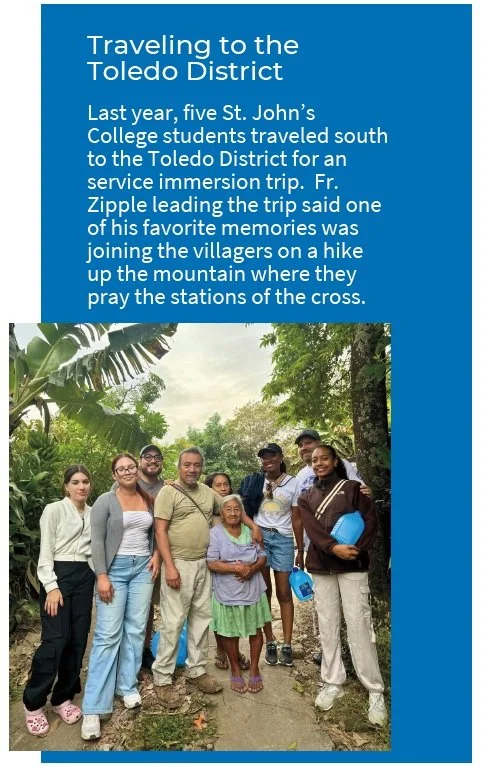
Service and cultural immersion trips have proven especially meaningful, giving students opportunities to explore parts of Belize many have never experienced. Earlier this year, a group traveled to the Toledo District in southern Belize, where they learned about faith traditions within the region’s rural communities.
Altogether the retreats, immersion trips, and smaller faith events have led to the involvement of over 500 students or 30% of the student body in campus ministry at the junior college.
The high school has seen similar growth, offering retreats for all four grades, compared to just three years ago when the school organized none. With new funding, all juniors are required to attend the Kairos retreat, and seniors have the chance to join service immersion experiences.
Already, Fr. Zipple said students report finding the experiences grounding — particularly for the high school students.
In Belize, where an estimated 50% of children experience some form of sexual abuse and even more face verbal or physical abuse, these retreats have taken on a deeper importance. Many young people grow up amid poverty with limited access to counseling or mental health support. For young men, they also face intense pressure to engage in the active gang and criminal activity in Belize.
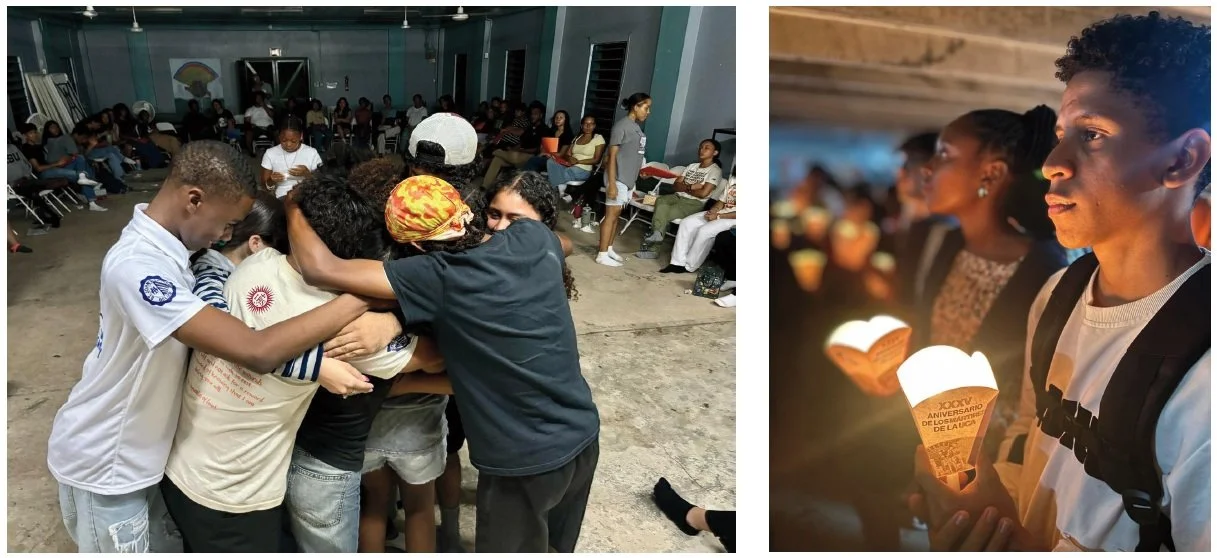
But, the retreats give students a rare chance to process trauma in a supportive, faith-centered environment. Each retreat includes access to counselors, and campus ministry continues to provide resources for students long after the experience ends.
“When [the student leaders] start bravely sharing those stories, students who have never had any kind of therapy, who have never told ... these experiences to anybody, now actually have a safe space to start to bring some of this to the light,” Fr. Zipple said.
These renewed faith initiatives continue St. John’s College’s long Jesuit tradition of uniting education and spirituality for young people, a legacy recognized this past September. While St. John’s College is known for its elite education, Fr. Zipple said the Jesuit’s unique spirituality is what makes St. John’s College so special and inspires this work.
“I just think the Jesuit tradition, Ignatian spirituality — who the Jesuits are and what we stand for — really do have a way of speaking to young people,” Fr. Zipple said. “It’s something that resonates with our young people here as elsewhere. It’s exciting to see that, and I just want to give them more access to that.”