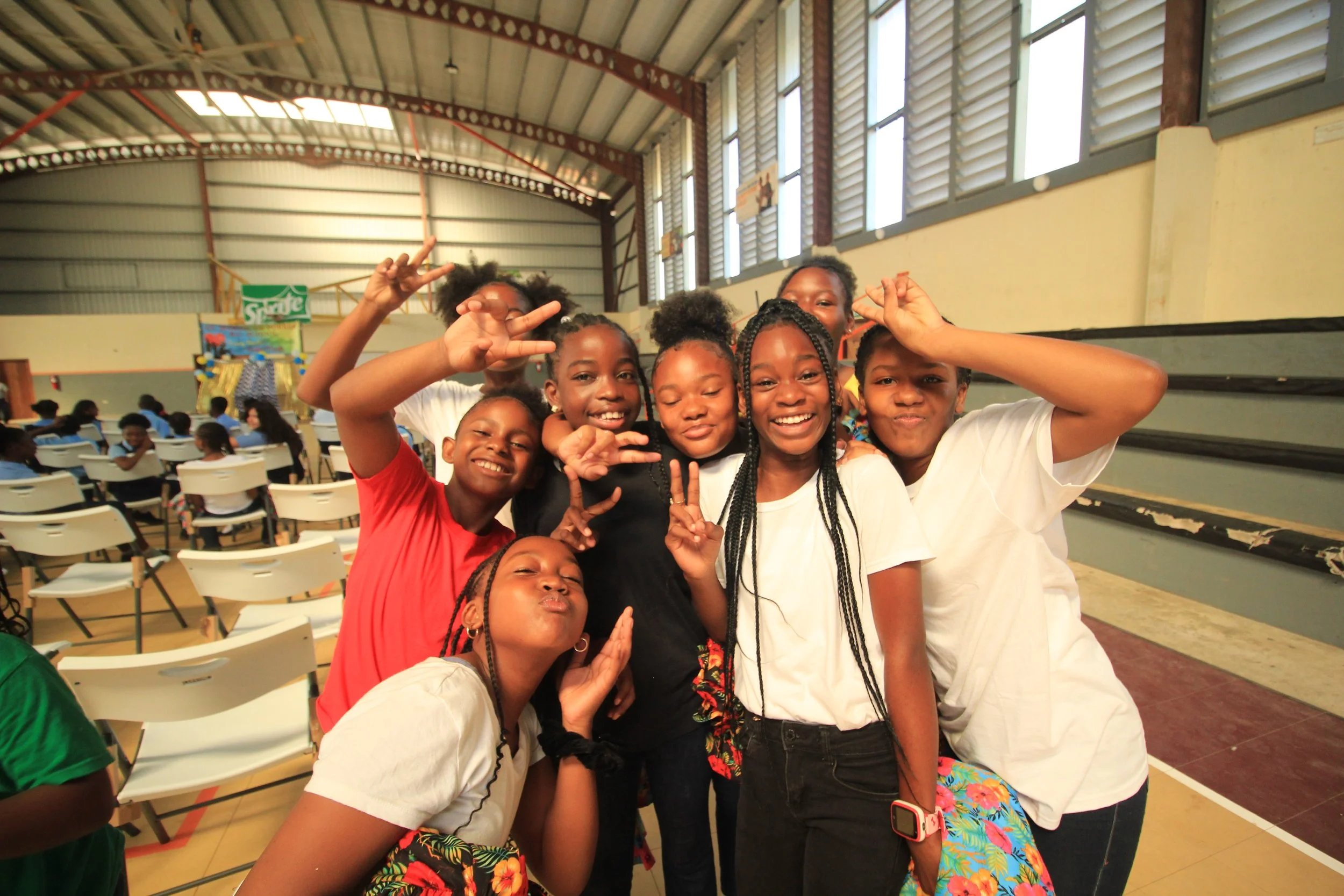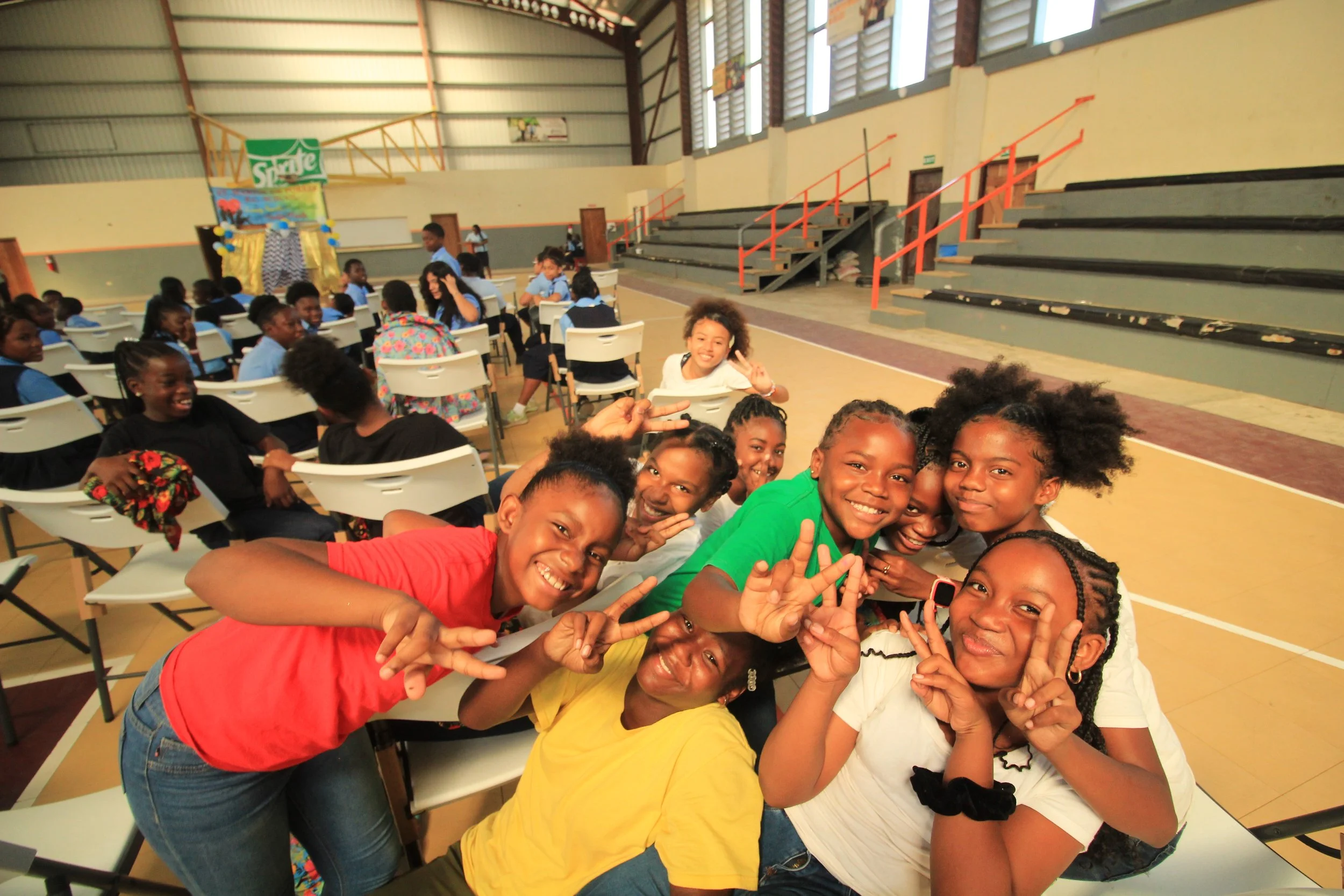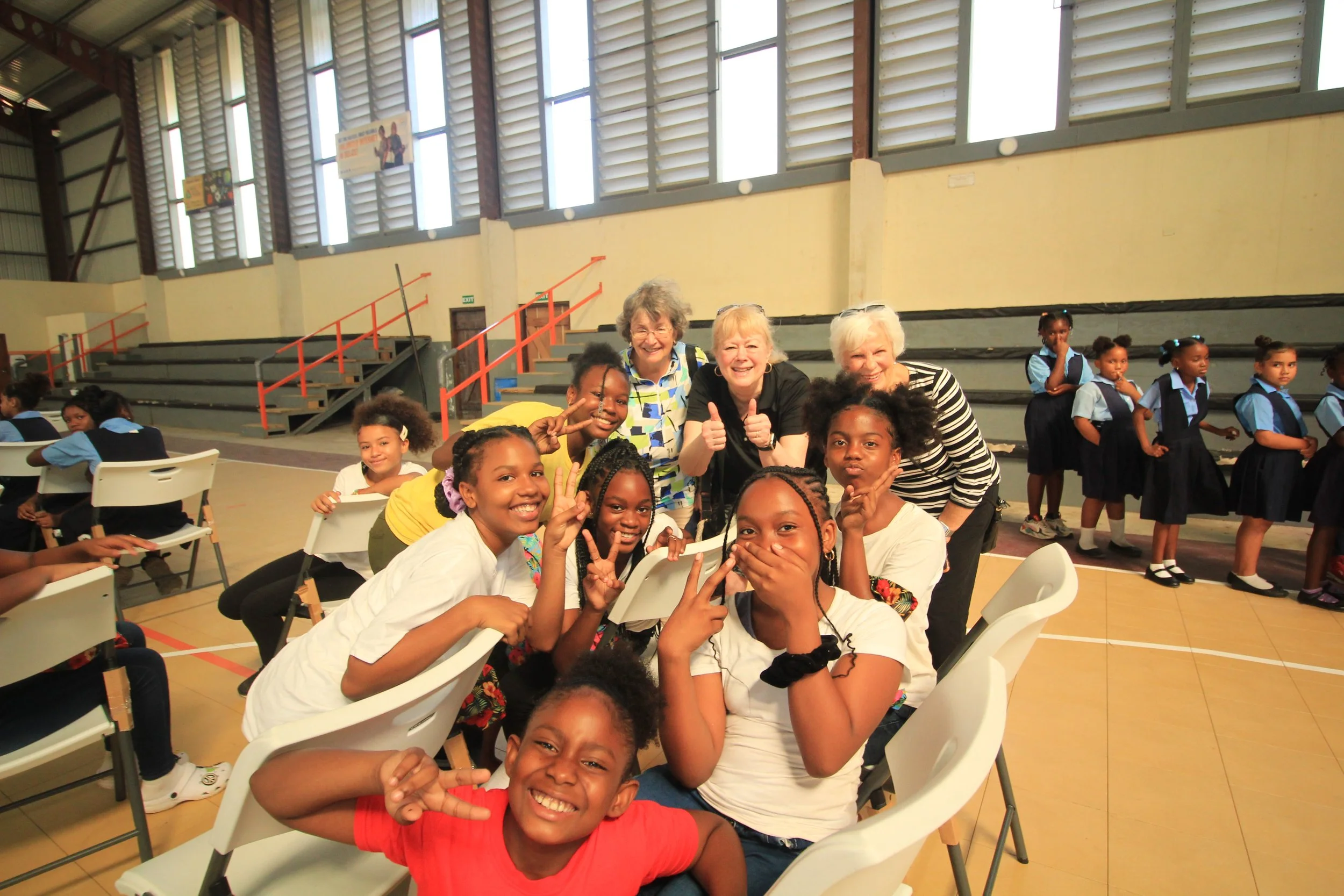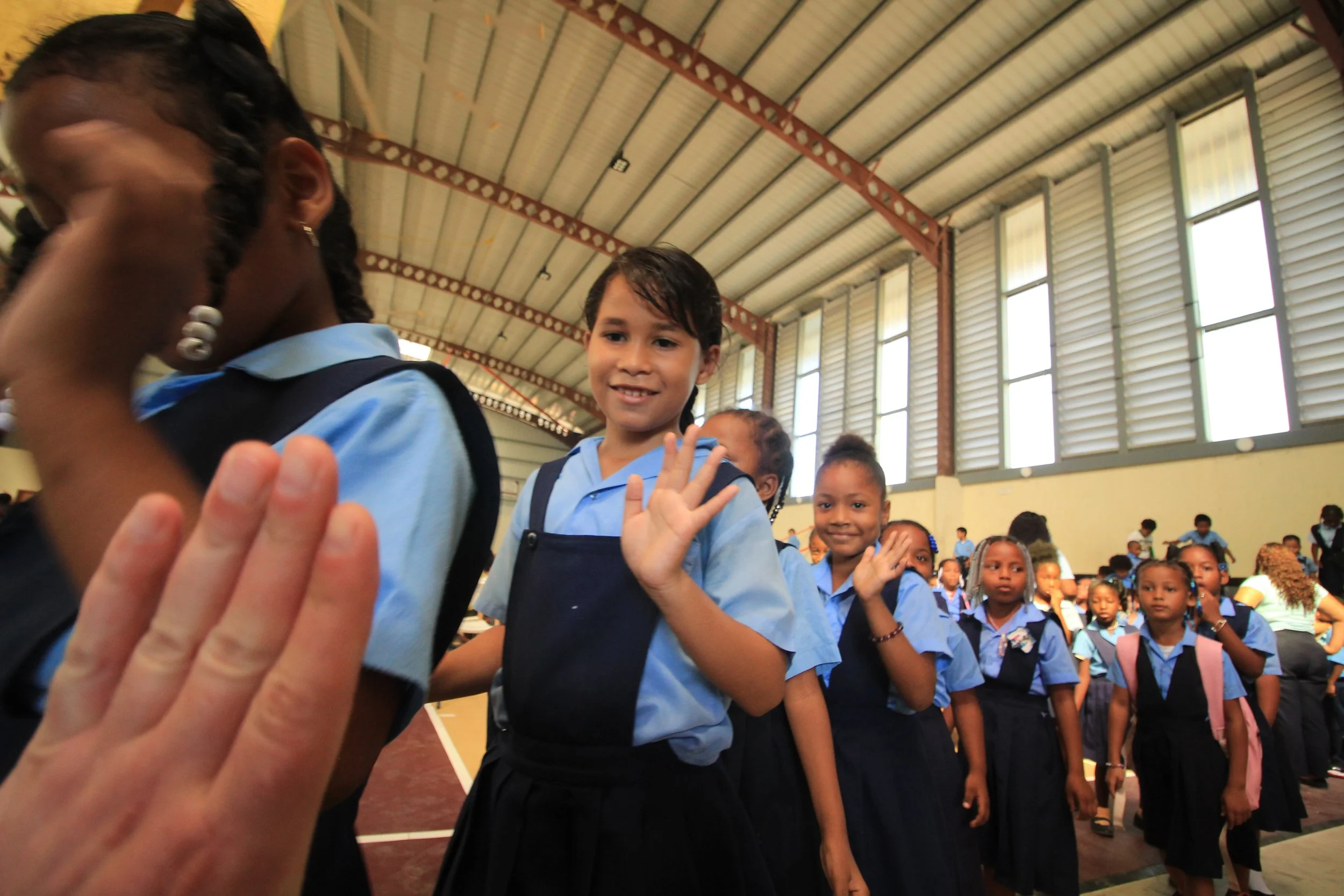
Belize2020 hosts it second-ever summit, looks toward the future

Interview with Belize 2020 summit attendees

When the nonprofit volunteer organization Belize 2020 launched at its first summit in 2014, the name reflected the year 2020 as the time period to accomplish a set of projects in Belize.

Now, in 2025, while the name of Belize 2020 is a little outdated, the organization continues to focus on improving the quality of life in Belize by supporting Jesuit ministries in the country.

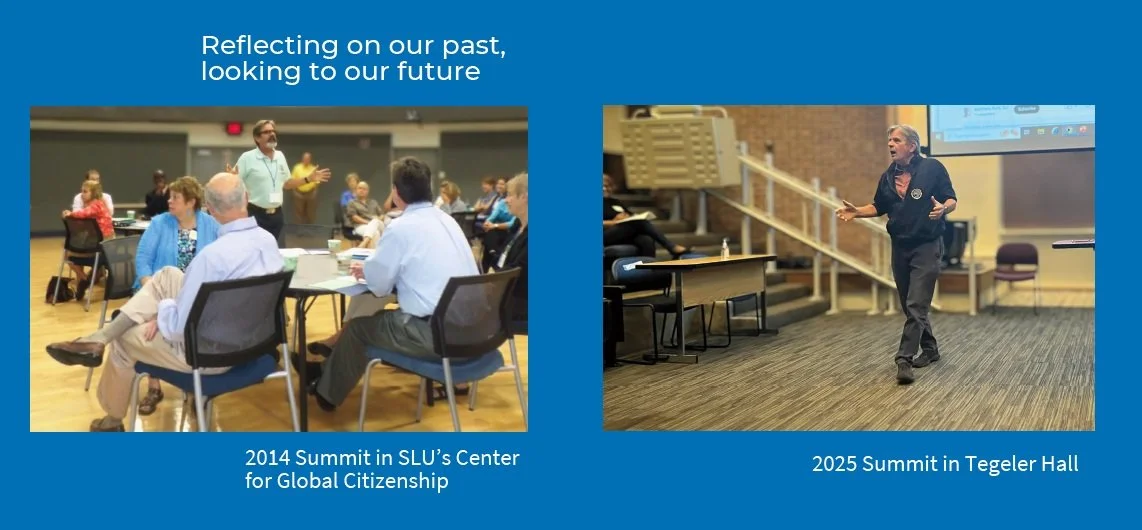
That decade-long effort and a need to envision the next decade of the organization drove Belize 2020 to host another large summit this past summer — a three-day event that included developing strategic priorities, including, yes, reflecting on a new name.

“God's here bringing us together and allowing both Belizeans and Americans and St. Louisans to see and develop with each other,” said Jack Krings, one of the founding members of Belize 2020.

The three-day summit was the culmination of months of preparation and marked a collective effort to focus not only on defining priority goals but also on imagining what Belize 2020 and its organizational identity should become in the coming years.

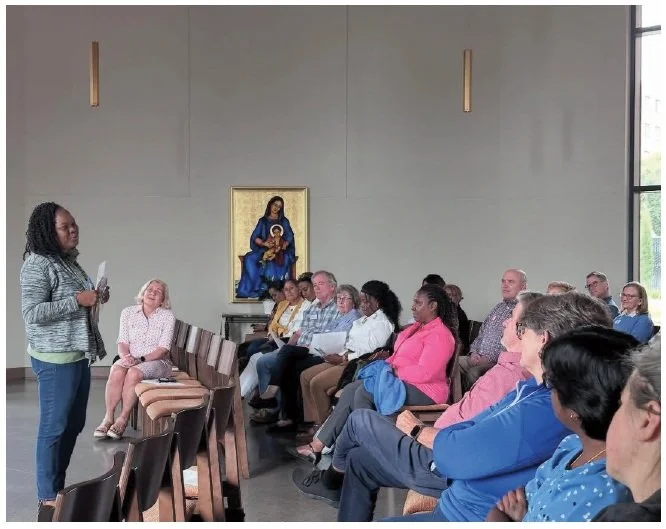
Summit members celebrate Mass and reflect together.

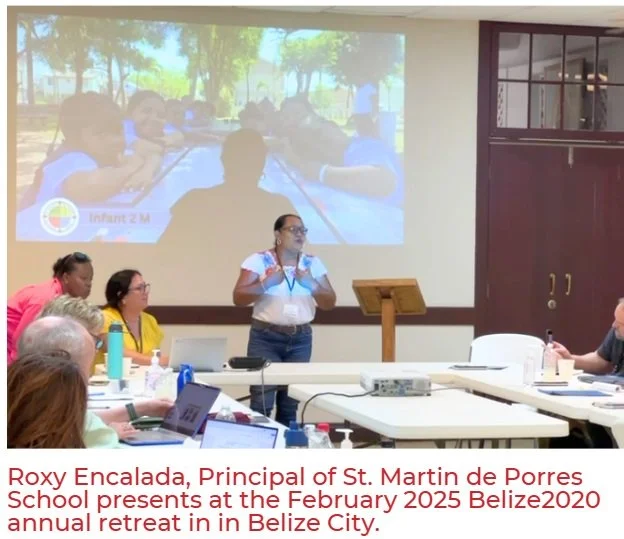
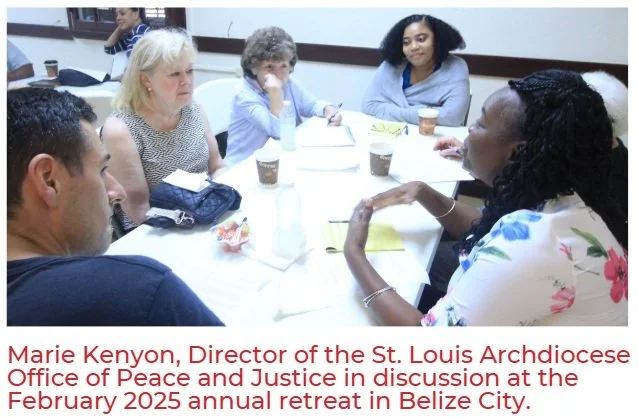
In February, at the annual retreat in Belize City, leaders of Belize 2020 organized six working subgroups identified by priority area: internal governance, educational partnerships, mental health and wellbeing, Catholic identity, nutrition and health, and physical infrastructure. From that retreat those working groups met virtually three times in the spring brainstorming a list of specific goals to then bring to the planning summit in June. Over the course of the summit, the goals and subgroups were further distilled into three key areas dealing broadly with organizational structure, education, and the Jesuit framework of “Cura Personalis.”

“The group has invested in a variety of programs, from education to mental health to physical infrastructure, with great success. The purpose of the summit was to reflect on the goal for these programs and to clarify our motivations for the future all while maintaining the group’s tight relationships with one another,” said SLU professor Bryan Sokol, one of the summit organizers. The planning process solidified a variety of projects and proposed directions for the group.

In the area of education, Belize 2020 aimed to bolster opportunities at St. Peter Claver School in southern Belize — one of the most under-resourced regions in the country. Proposed initiatives include launching a literacy program similar to St. Martin’s, securing funding for a school counselor, and expanding access to scholarships that would enable high school graduates to attend junior colleges in Belize.

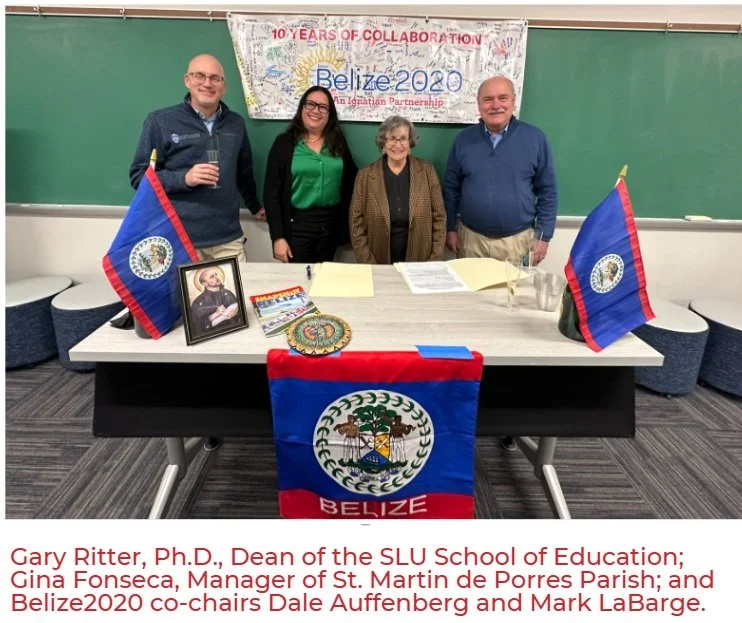
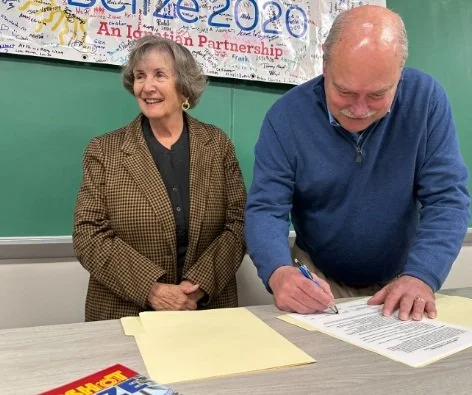
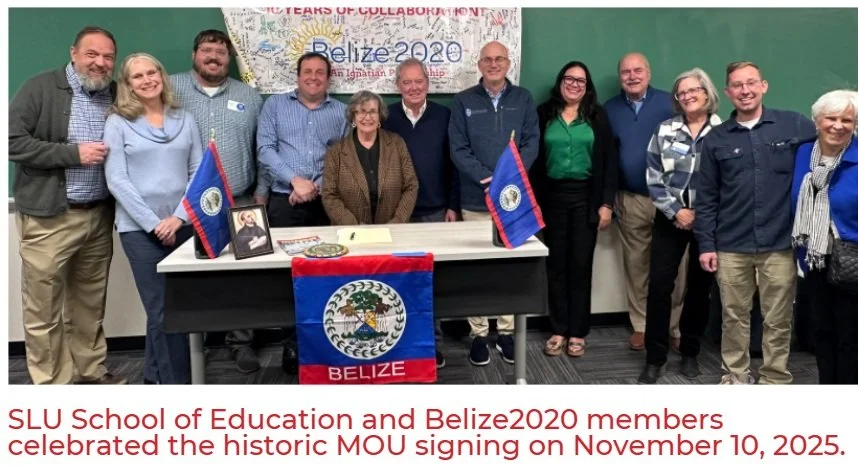
The plan also described potential steps to strengthen the organization itself, such as creating an advisory board, establishing clear funding priorities, and drafting a memorandum of understanding with SLU’s School of Education to formalize the partnership between SLU and Belize 2020.

Lastly, the strategic plan called for a focus on holistic health — blending mental, physical, and spiritual wellbeing through an Ignatian framework of Cura Personalis. Reflecting this commitment, the summit planners recognized that resources needed to be directed not only to students but also to teachers. The group also acknowledged the need for more formal listening sessions to better understand what health and nutritional resources Belizeans struggled to access.

The summit’s planning efforts affirmed the current trajectory of Belize 2020, which in the past decade has been built on a love, generosity, and commitment that originated in the first summit at SLU in 2014.

“Belize 2020 is a grounded group, a cooperative group comprised of Belizeans and our [other] parties who are working to make things better,” said Claret Jacobs, the assistant local manager in southern Belize. “They are there to build together, to strengthen. It is not about one person, it is about everyone.”

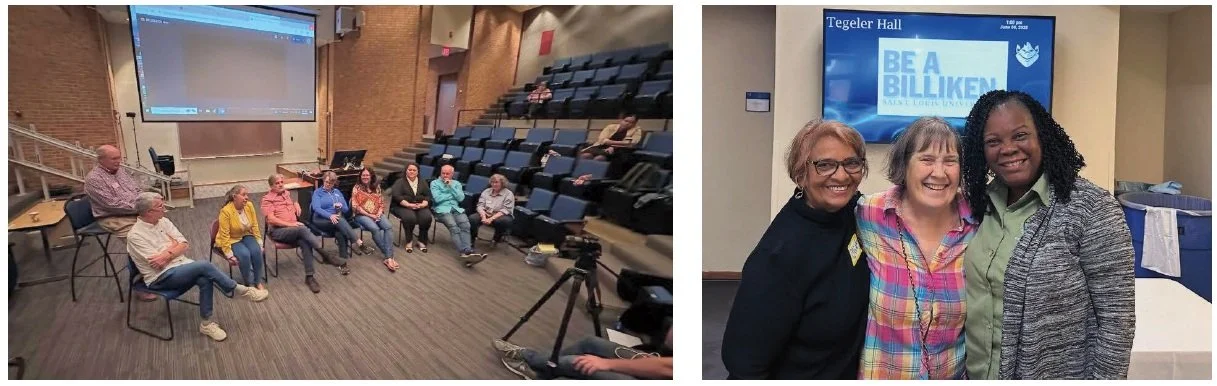
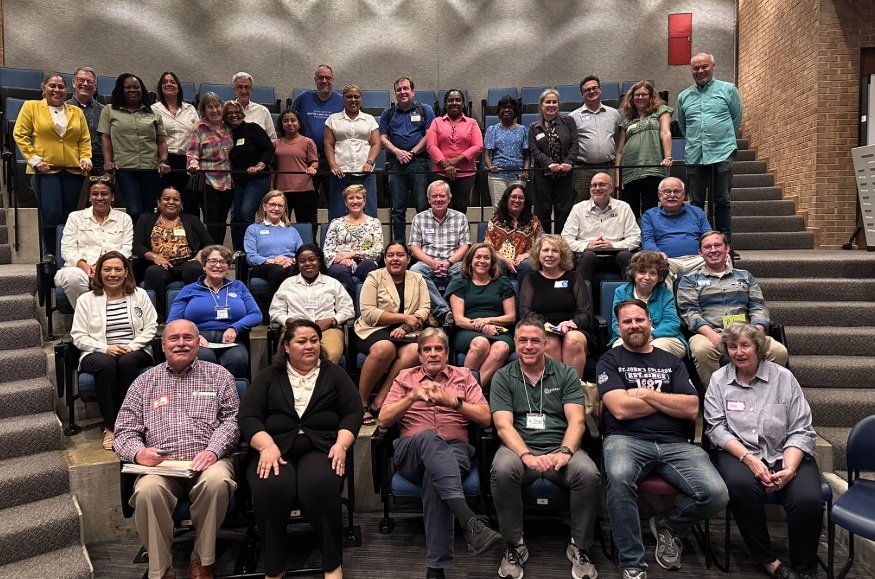
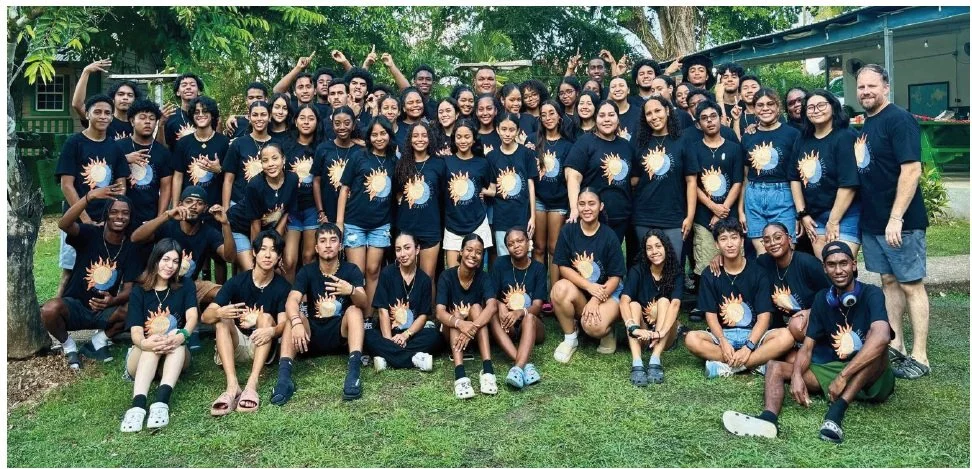
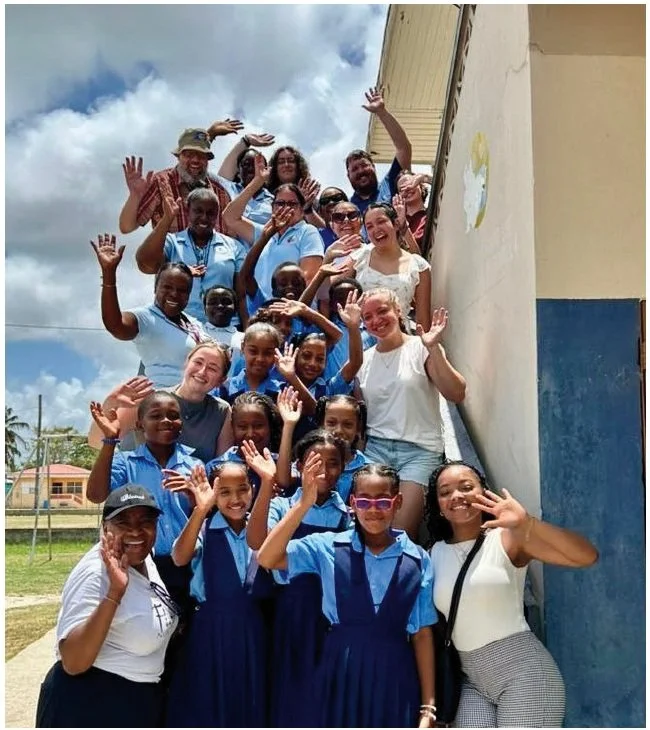
Members of the 2025 Summit @ SLU 2.0

Celebrating 175 years of Jesuits in Belize, St. John’s returns to faith roots

Interview with Fr. Jeremy Zipple, S.J., Chief Mission Officer at St. John’s College

Amid a wave of secularization in Belize, one of the bastions of faith-based education in the country, St. John’s College, has struggled to emphasize its Jesuit and religious roots among a student body with different priorities.

That is beginning to change as the college revamps its ministry programs and expands opportunities for students to deepen their spiritual lives.

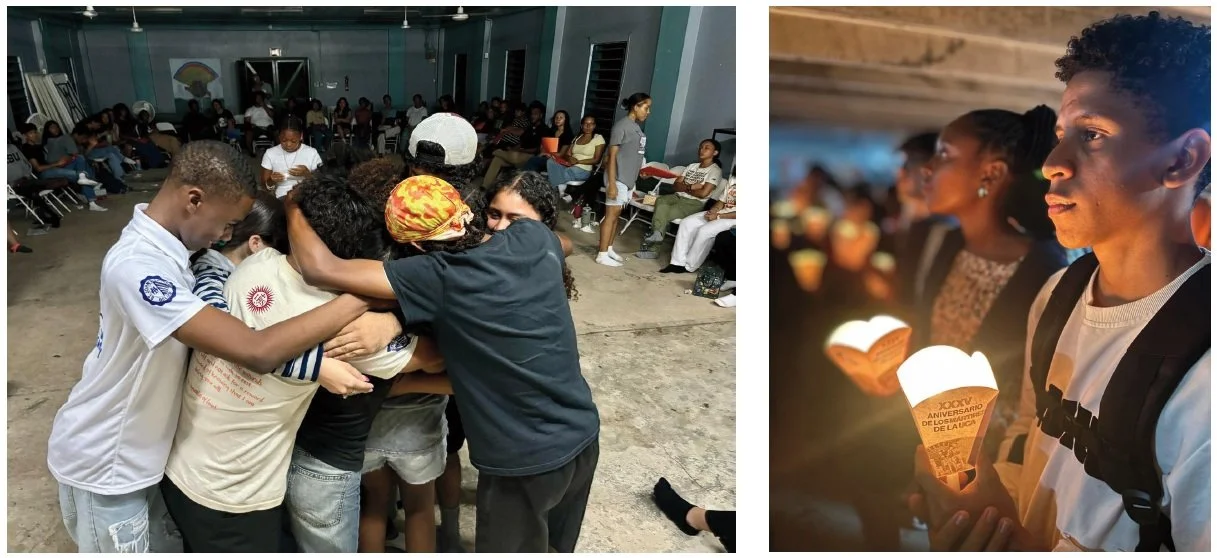
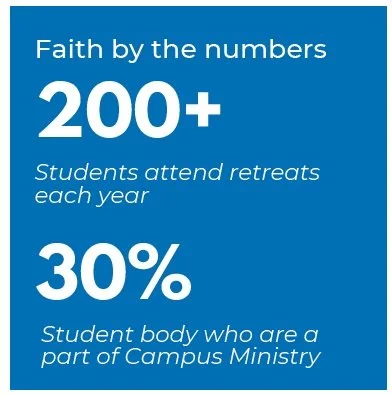
At the junior college level, St. John’s now offers four main retreats and several service immersion programs to meet the growing demand for faith development among students. Just a few years ago, only about 60 students participated in retreats; today, the programs engage more than 200 students annually.

Leading the efforts, Fr. Jeremy Zipple, S.J., the school’s chief mission officer, said the return is an important step for St. John’s — and right in time too, coinciding with the celebration of 44 years of St. John’s College and 175 years of Jesuit work in Belize.

“I think we're starting to recover that now,” Fr. Zipple said. “We have some Jesuits for whom that's important, and we've started reinvesting in the school again and re-involving ourselves.”

The faith formation efforts have been integrated into all three divisions of St. John’s, which includes college, junior college, and high school programs.

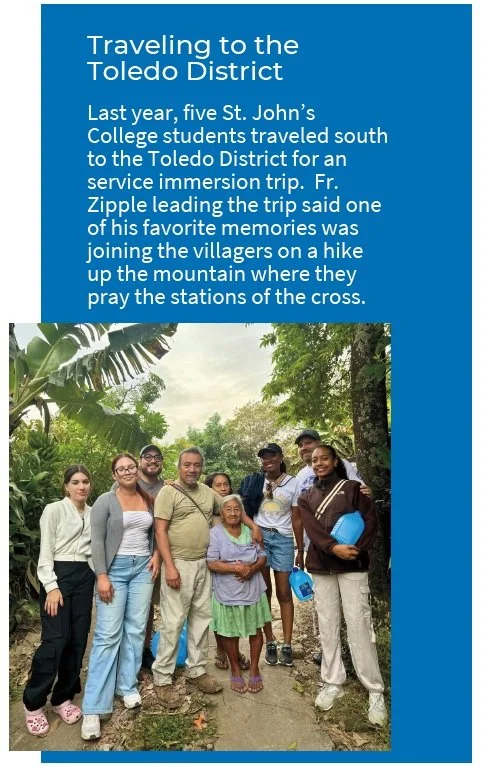
Service and cultural immersion trips have proven especially meaningful, giving students opportunities to explore parts of Belize many have never experienced. Earlier this year, a group traveled to the Toledo District in southern Belize, where they learned about faith traditions within the region’s rural communities.

Altogether the retreats, immersion trips, and smaller faith events have led to the involvement of over 500 students or 30% of the student body in campus ministry at the junior college.

The high school has seen similar growth, offering retreats for all four grades, compared to just three years ago when the school organized none. With new funding, all juniors are required to attend the Kairos retreat, and seniors have the chance to join service immersion experiences.

Already, Fr. Zipple said students report finding the experiences grounding — particularly for the high school students.

In Belize, where an estimated 50% of children experience some form of sexual abuse and even more face verbal or physical abuse, these retreats have taken on a deeper importance. Many young people grow up amid poverty with limited access to counseling or mental health support. For young men, they also face intense pressure to engage in the active gang and criminal activity in Belize.

But, the retreats give students a rare chance to process trauma in a supportive, faith-centered environment. Each retreat includes access to counselors, and campus ministry continues to provide resources for students long after the experience ends.

Retreatants at St. John’s College

“When [the student leaders] start bravely sharing those stories, students who have never had any kind of therapy, who have never told ... these experiences to anybody, now actually have a safe space to start to bring some of this to the light,” Fr. Zipple said.

These renewed faith initiatives continue St. John’s College’s long Jesuit tradition of uniting education and spirituality for young people, a legacy recognized this past September. While St. John’s College is known for its elite education, Fr. Zipple said the Jesuit’s unique spirituality is what makes St. John’s College so special and inspires this work.

“I just think the Jesuit tradition, Ignatian spirituality — who the Jesuits are and what we stand for — really do have a way of speaking to young people,” Fr. Zipple said. “It’s something that resonates with our young people here as elsewhere. It’s exciting to see that, and I just want to give them more access to that.”

New team, fresh spirit: School leadership and assessment expansion at St. Martin’s bring optimism to school year

Interview with Gina Fonseca, Assistant Local Manager

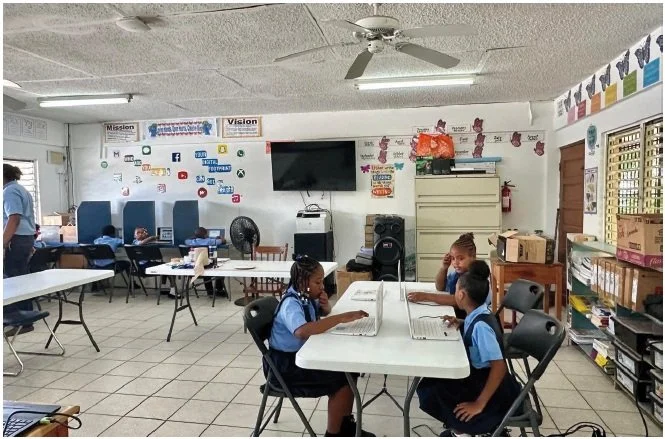
New computer lab at St. Martin de Porres School

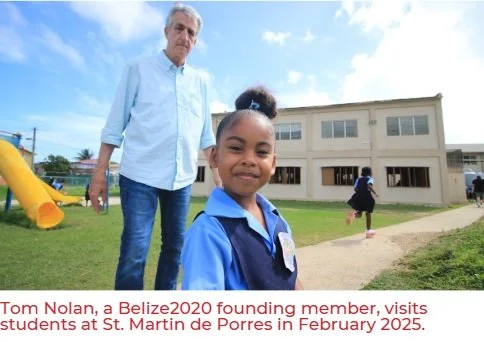
A full computer lab wasn’t even a dream ten years ago for St. Martin de Porres School, especially as the historically underfunded school had yet to build a gym.

But, rapid growth from the generosity of donations and grants — especially from Belize 2020 members —have transformed St. Martin de Porres over the past decade, with the school adding literacy initiatives, counseling resources, and yes, even the construction of a new gym.

Starting this academic year, though, the school looks to even more growth with the addition of a computer lab with enough devices for a full class of students. Now, every student across Grades 4-8 will have access to a computer for a technology class that St. Martin’s recently introduced. Lower grades will be added next year.

“To get them into computer classes was something we needed to try and do for them quickly, because we've had cases where these students [who have never used a computer] finish and go to high school where you're expected to do a lot of online work,” said Assistant Local Manager Gina Fonseca.

The new computer lab is one of the many new initiatives that St. Martin de Porres School has launched this year as it hopes to prepare its students for high school, including admission to more elite institutions where St. Martin’s students have historically struggled to be accepted.

The school, one of two Jesuit elementary and middle schools in the country, predominately serves students from low-income households in some of the most dangerous neighborhoods in the city and country. Challenges associated with these social factors have meant that many St. Martin’s students, according to Fonseca, struggle to compete with students from more affluent schools and have “slipped through the cracks.”

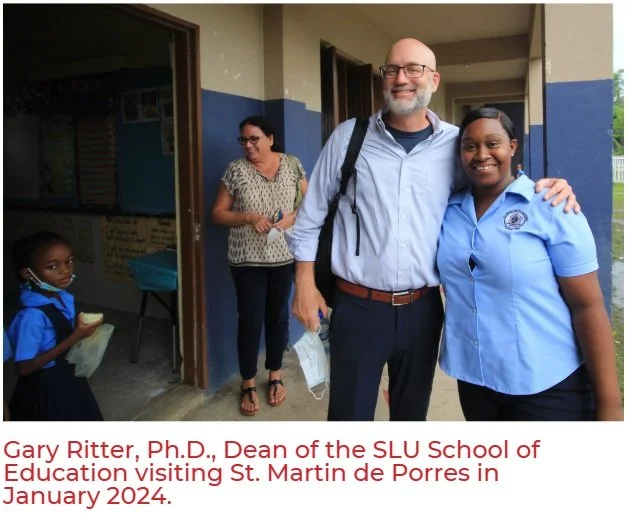
That has all changed over the past decade with support from Belize 2020, who has helped the school be more effective at serving its over 600 students. Yet, a whole new administrative team believes the school can further increase the success of its student body. The new team at the school includes Roxy Encalada, the new principal, along with Michelle Gordon and Sherdia Benguche, the two vice principals — all who started in their roles this summer, just a couple months ago.

A full computer lab wasn’t even a dream ten years ago for St. Martin de Porres School, especially as the historically underfunded school had yet to build a gym.

But, rapid growth from the generosity of donations and grants — especially from Belize 2020 members —have transformed St. Martin de Porres over the past decade, with the school adding literacy initiatives, counseling resources, and yes, even the construction of a new gym.

Starting this academic year, though, the school looks to even more growth with the addition of a computer lab with enough devices for a full class of students. Now, every student across Grades 4-8 will have access to a computer for a technology class that St. Martin’s recently introduced. Lower grades will be added next year.

“To get them into computer classes was something we needed to try and do for them

Encalada and Benguche have been students in SLU’s education program.

“One of [Encalada’s] dreams is to see a very tight-knit team, with teachers, admin, and even parents that are invested and committed to St Martin's, that we're working like a well-oiled machine,” said Fonesca.

So far this year, Encalada and her team have been prioritizing communication and goal setting as a means of holding the school accountable to its ambitions of supporting students. Encalada has sent out more information to parents and has had more full division meetings with teachers at the school than ever before. She has also worked with each teacher to create individual benchmarks and goals.

Additionally, the school expands its assessments this school year as a way of holding each class accountable. The school, which has previously had two reading assessments for the students in grades 1-4, has now been expanded to include students in grades 1-7. There are also plans to include assessments of math literacy, which has become an even larger concern at the school.

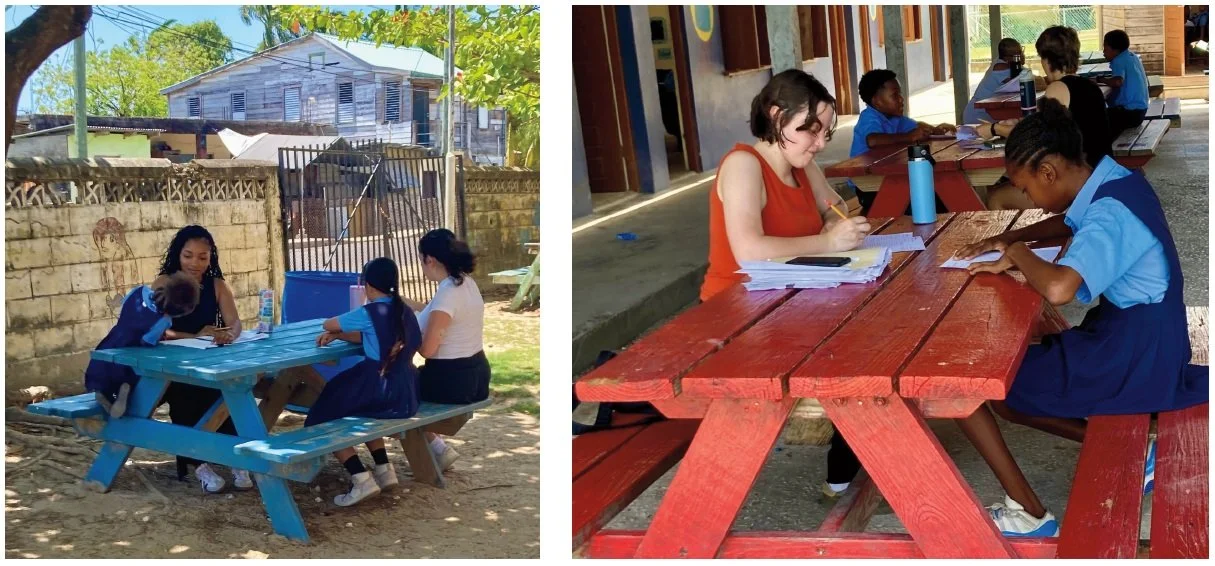
SLU students visit St. Martin’s for a summer service experience.

“We've always had problems with our students getting into the more elite high schools because they're always told their grades aren't good enough, they don't have the right academic background,” said Fonseca. “And while that might be true, we can't accept that. We have to find a way to make them good enough, to make their academic background stronger. These assessments are one way that helps catch [learning gaps] before students get to grade eight and move on to high school.”

Reading assessments at St. Martin’s with the help of SLU students finished in record time.

Ultimately, the success and the new initiatives have made Fonseca and her fellow administrators particularly grateful and optimistic about the future of the school.

“I would like them to think about St Martin's as a safe, loving space for any child that enters our gates, that when they get there, they're at home, they're safe, they're loved,” said Fonesca. “I want them to think of it as a safe space for all our children, and that we are their family.”

Belize2020 Celebrates 10 Years of Progress at January 2024 Retreat

Reporting by Mark LaBarge, Belize2020 Co-chair

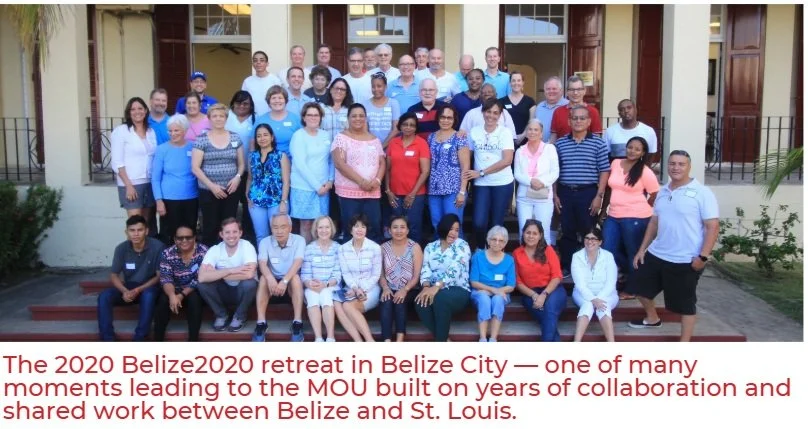
In January 2024, Belize2020 members gathered for a special retreat to reflect on 10 years of incredible progress and to plan for the future. The retreat brought together leaders from both Belize and St. Louis, including key representatives from the Jesuit missions, St. Louis University and Belizean partners representing St. John’s College, St. Martin De Porres, and St. Peter Claver. The atmosphere was filled with enthusiasm and a shared vision for the next chapter of Belize2020.

Building Relationships and Reflecting on 10 Years of Impact

Attendees included Fr. Brian Christopher, Superior of the Belize Jesuit Community; Fr. Matt Ruhl, Pastor of St. Peter Claver Parish; Fr. Andres Val Serra, Pastor of St. Martin de Porres Parish; and Fr. Matthew Baugh, Director of the retreat. The retreat began with a warm welcome dinner, setting the tone for a productive and inspiring few days. Belize2020 volunteers included longtime Jesuit supporters, individuals with experience in healthcare and education, and new friends, all united by shared values supporting Jesuit works in Belize.

The main theme of the retreat was “Building on 10 Years of Grace.” Participants reflected on the successes of the past decade, including improvements in education, health, and community engagement. Fr. Matthew Baugh led discussions, focusing on how the collective work of Belize2020 has positively impacted the lives of those we serve, particularly the students at St. Martin de Porres School.

Highlights of the Retreat

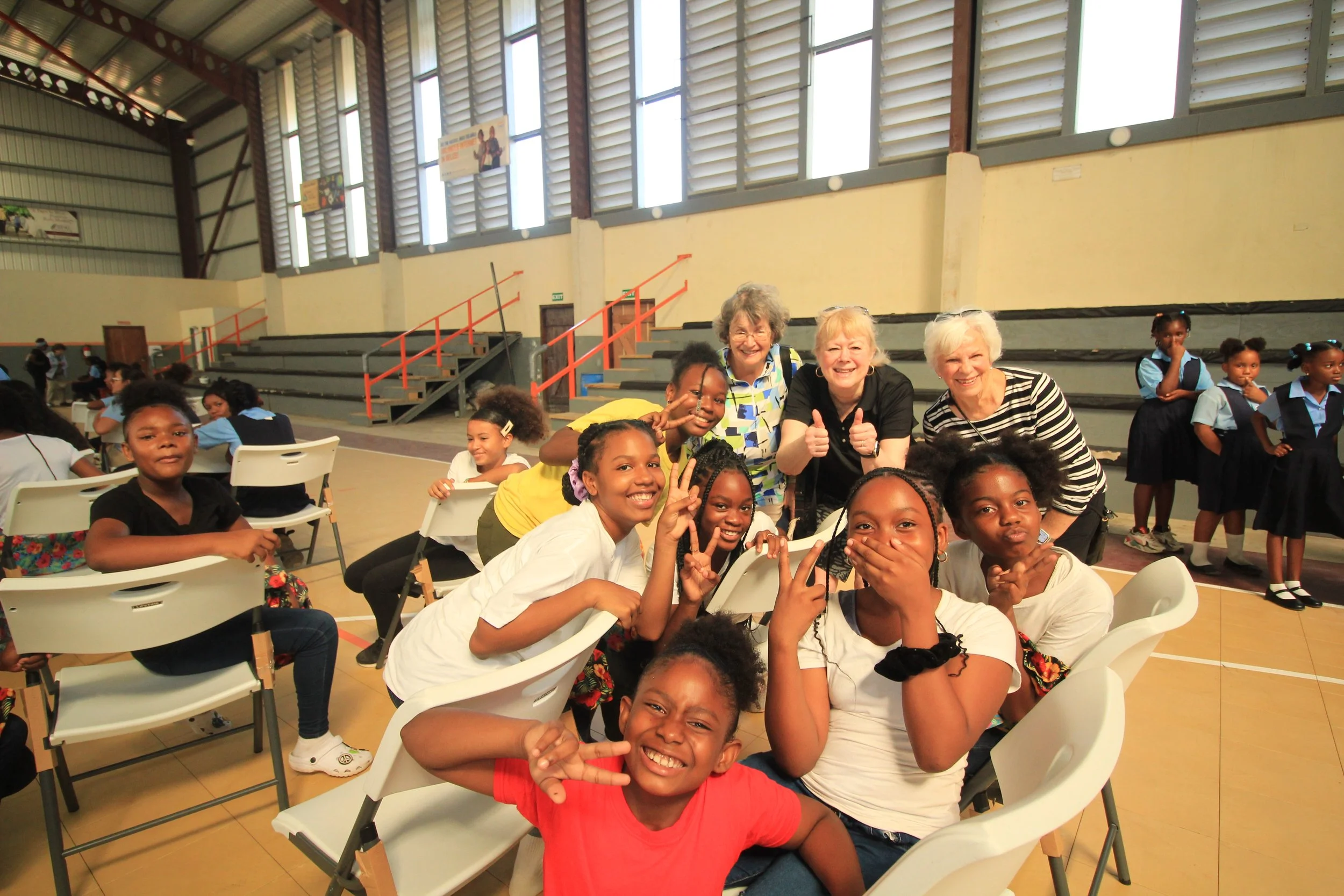
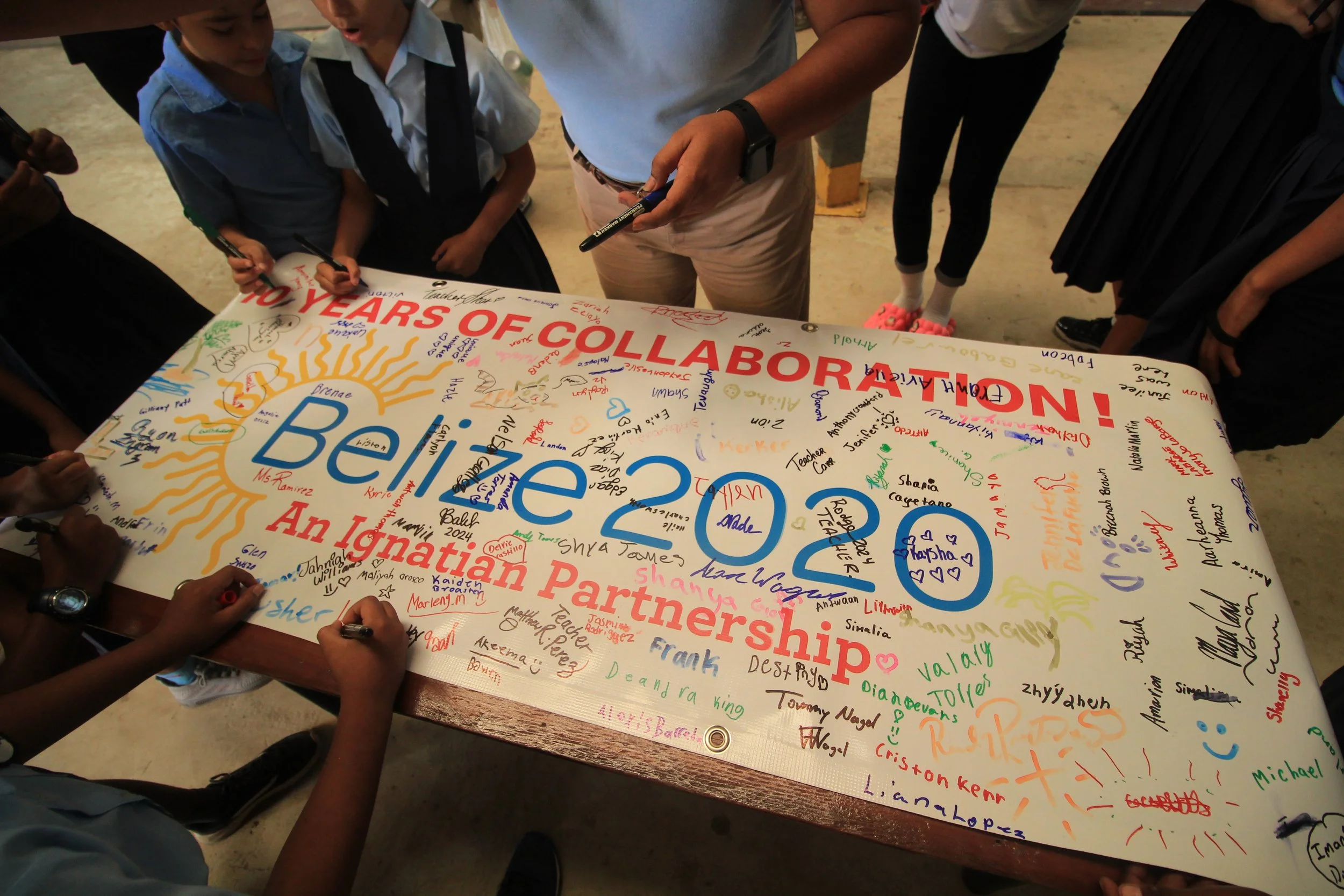
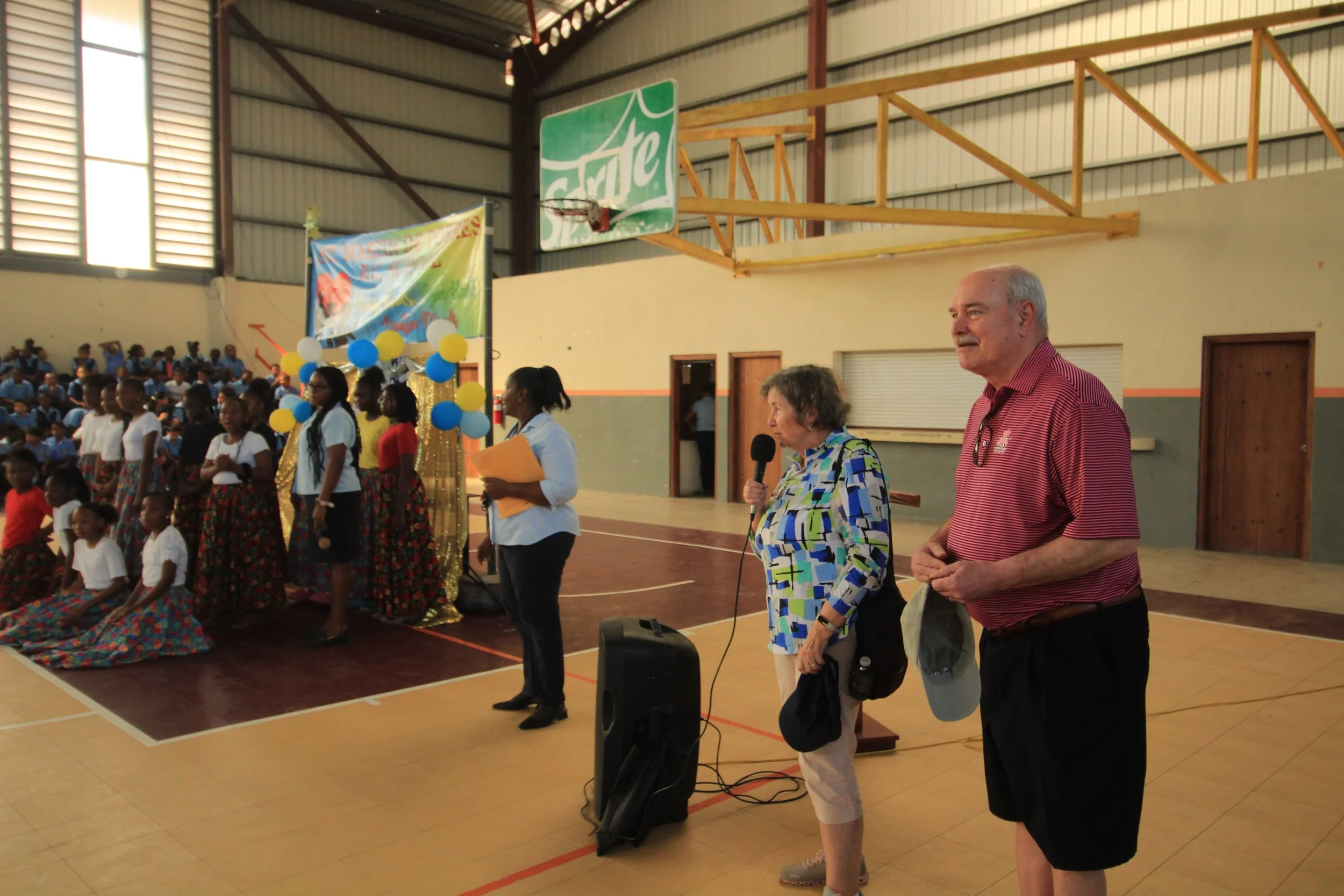
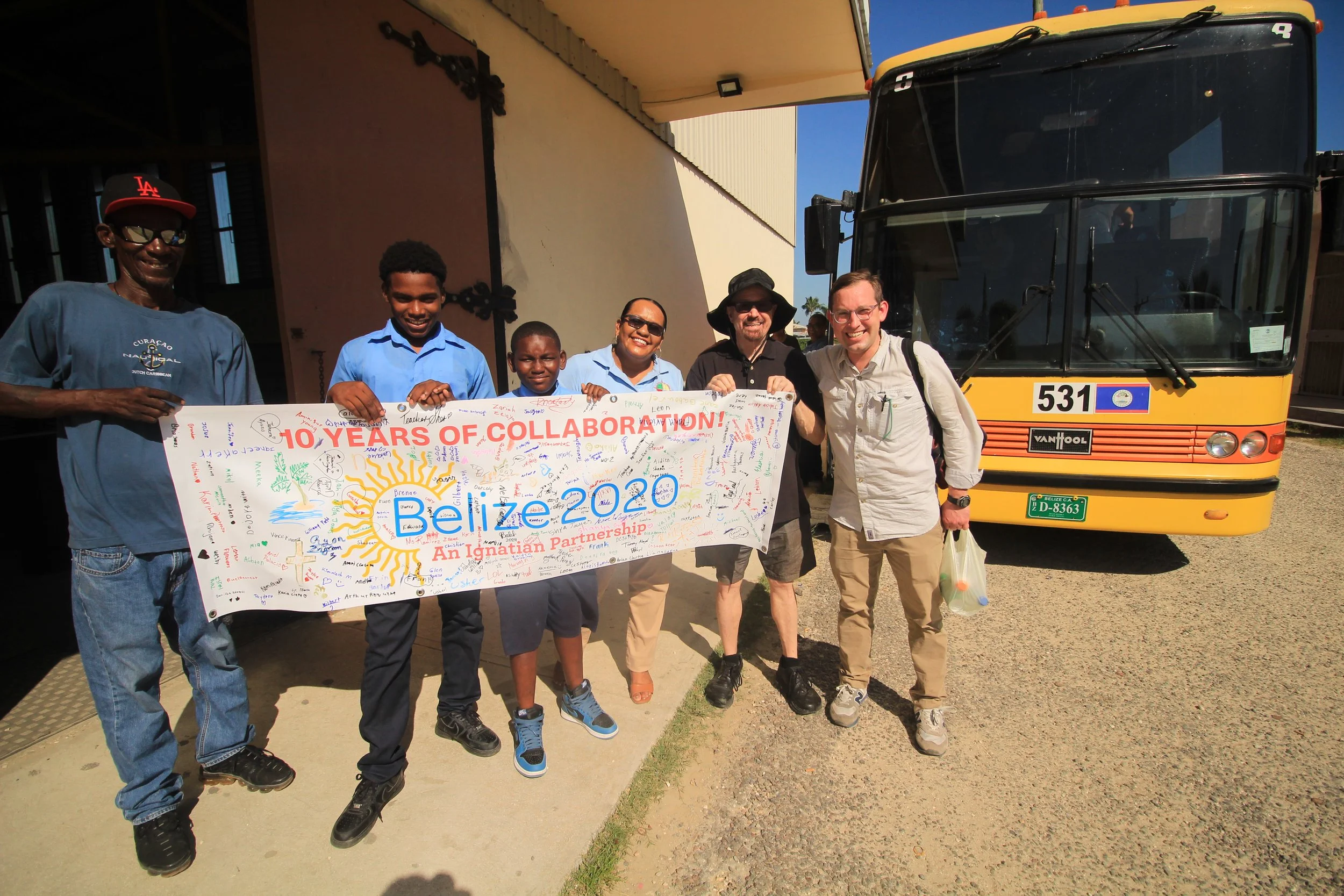
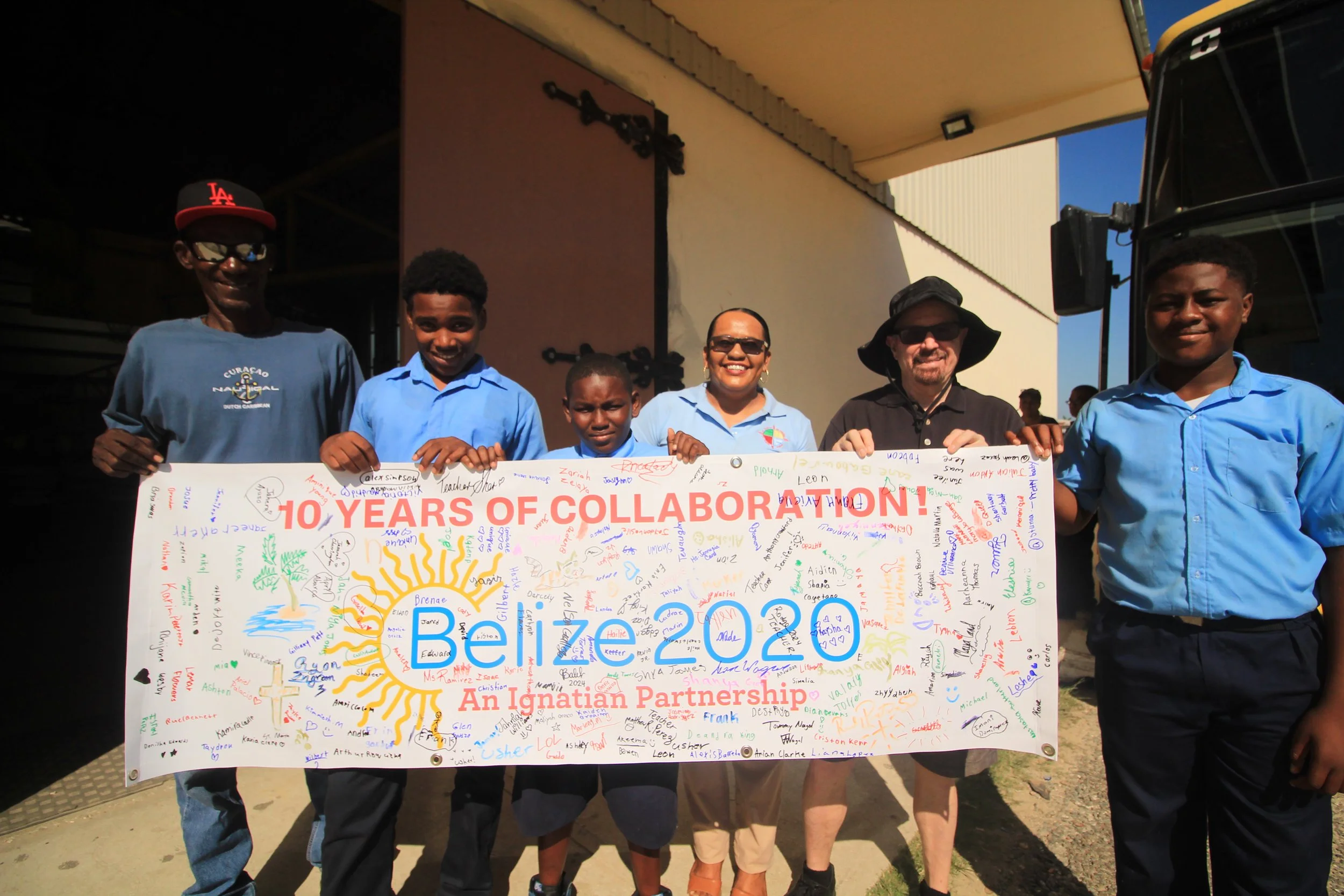
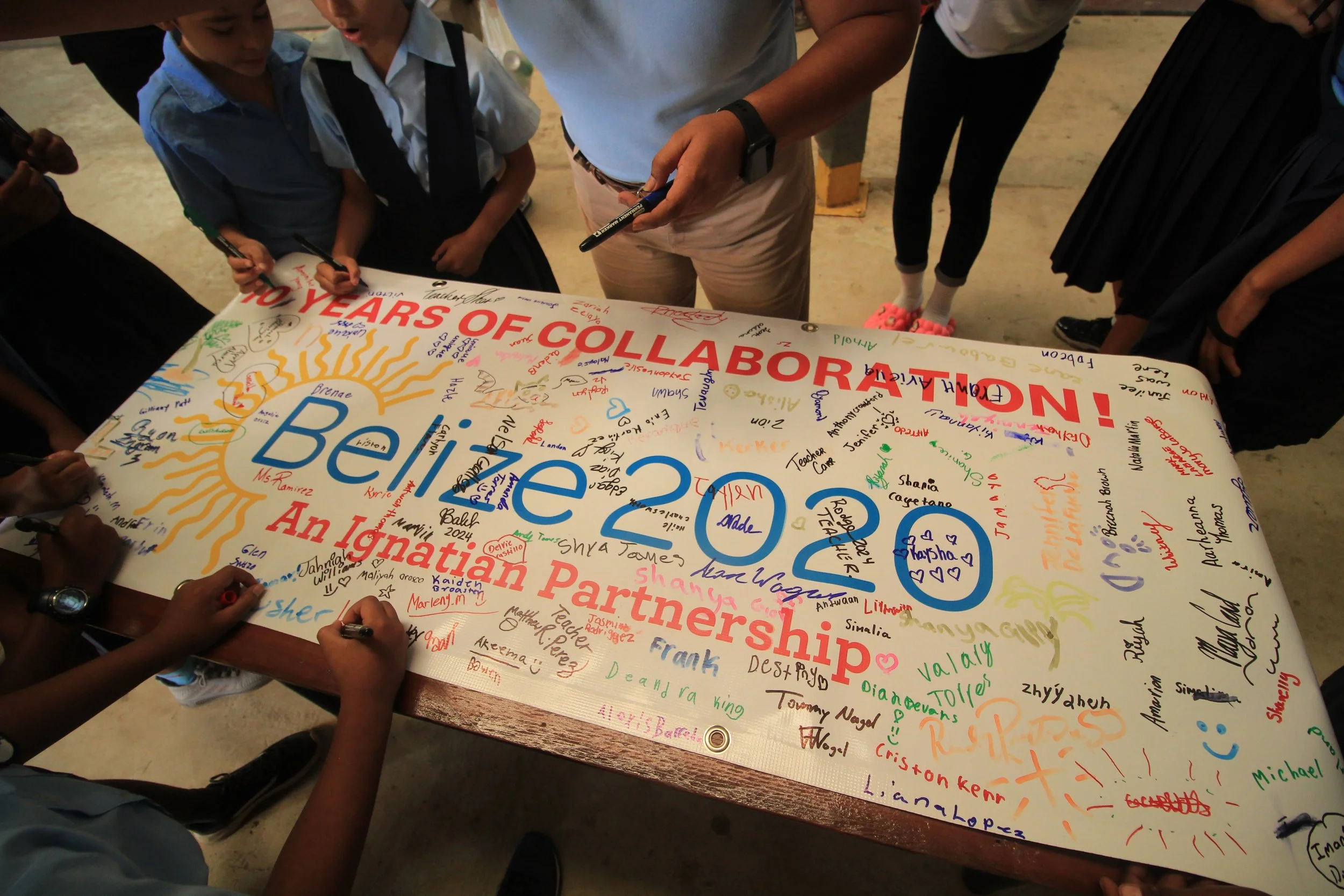
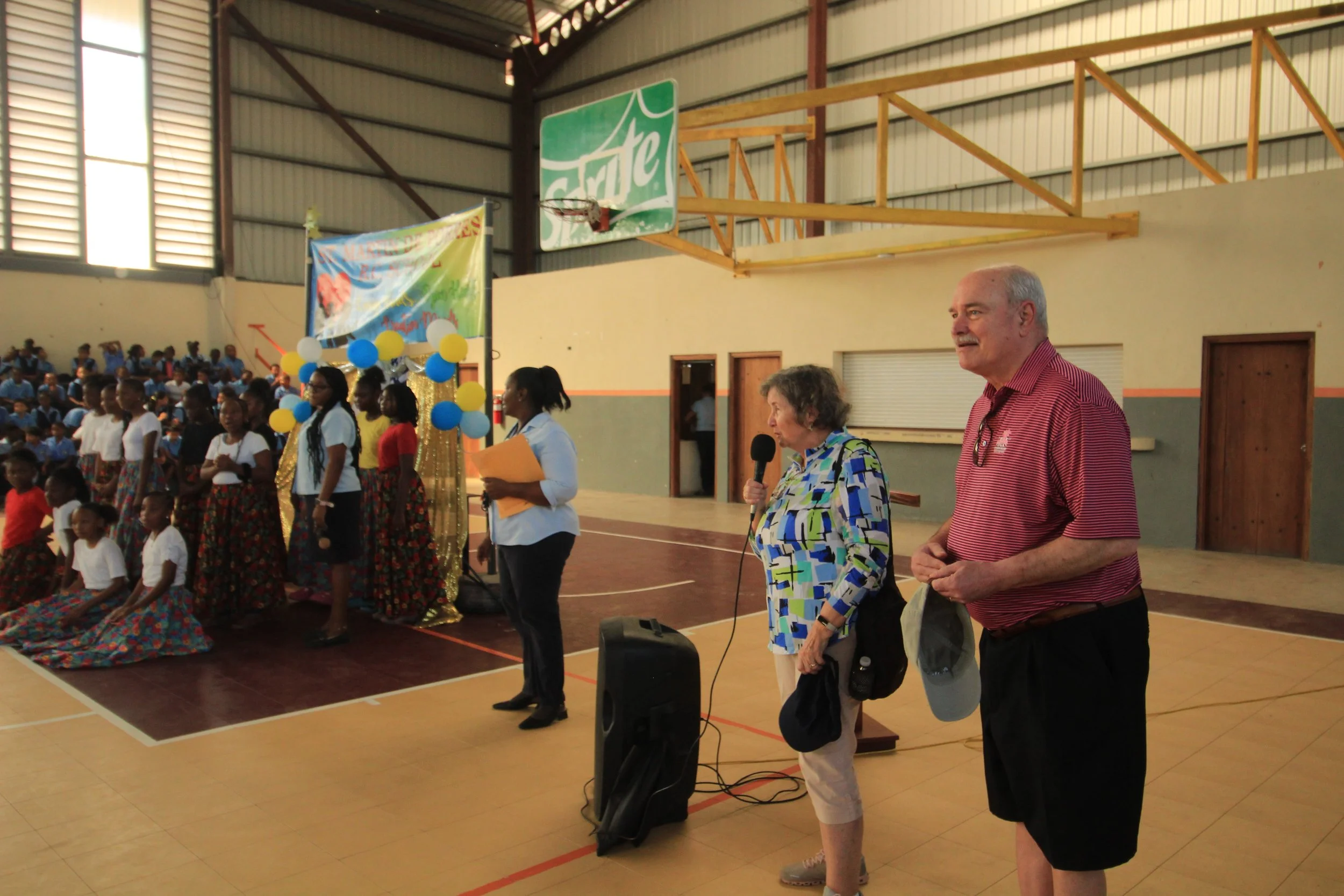
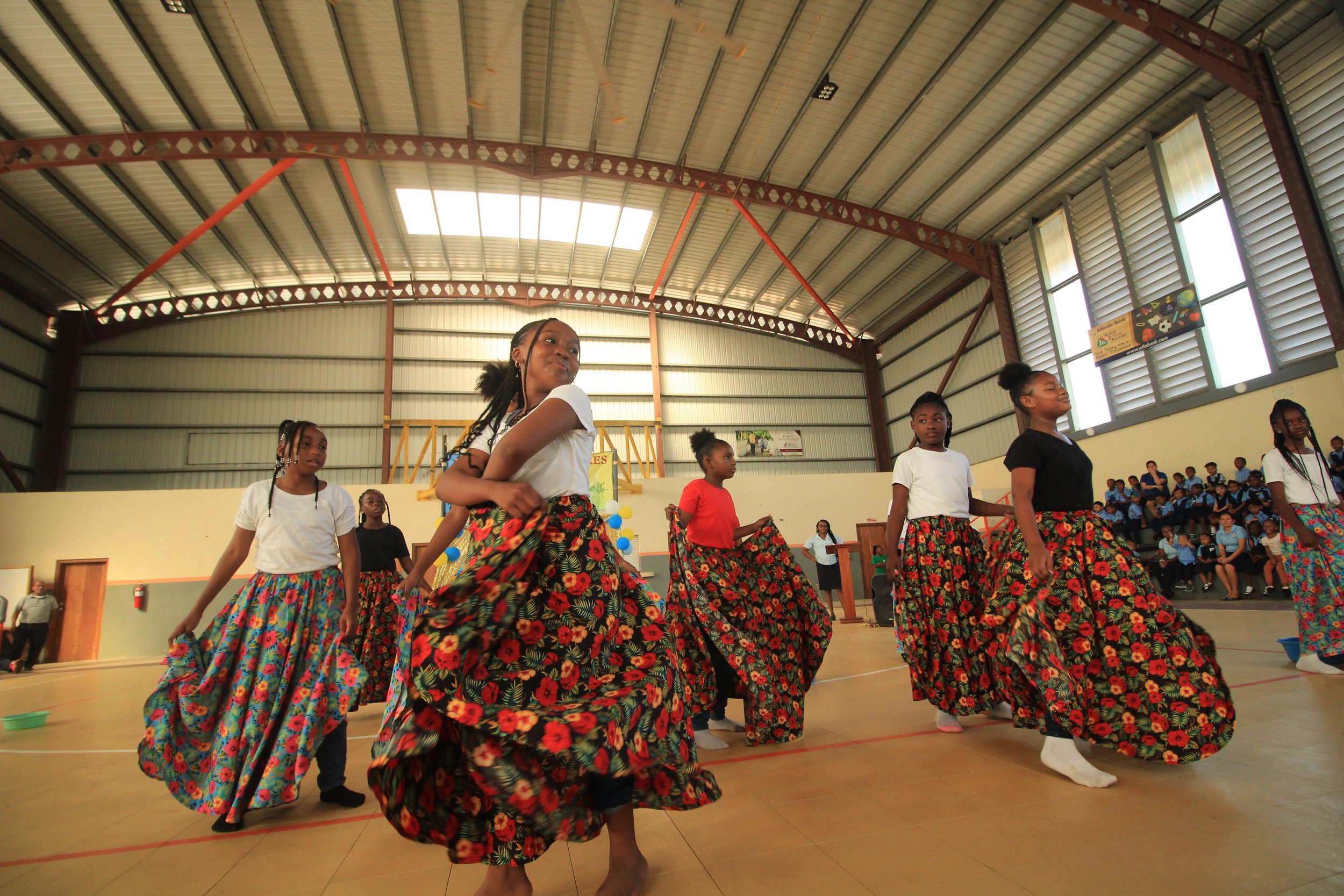
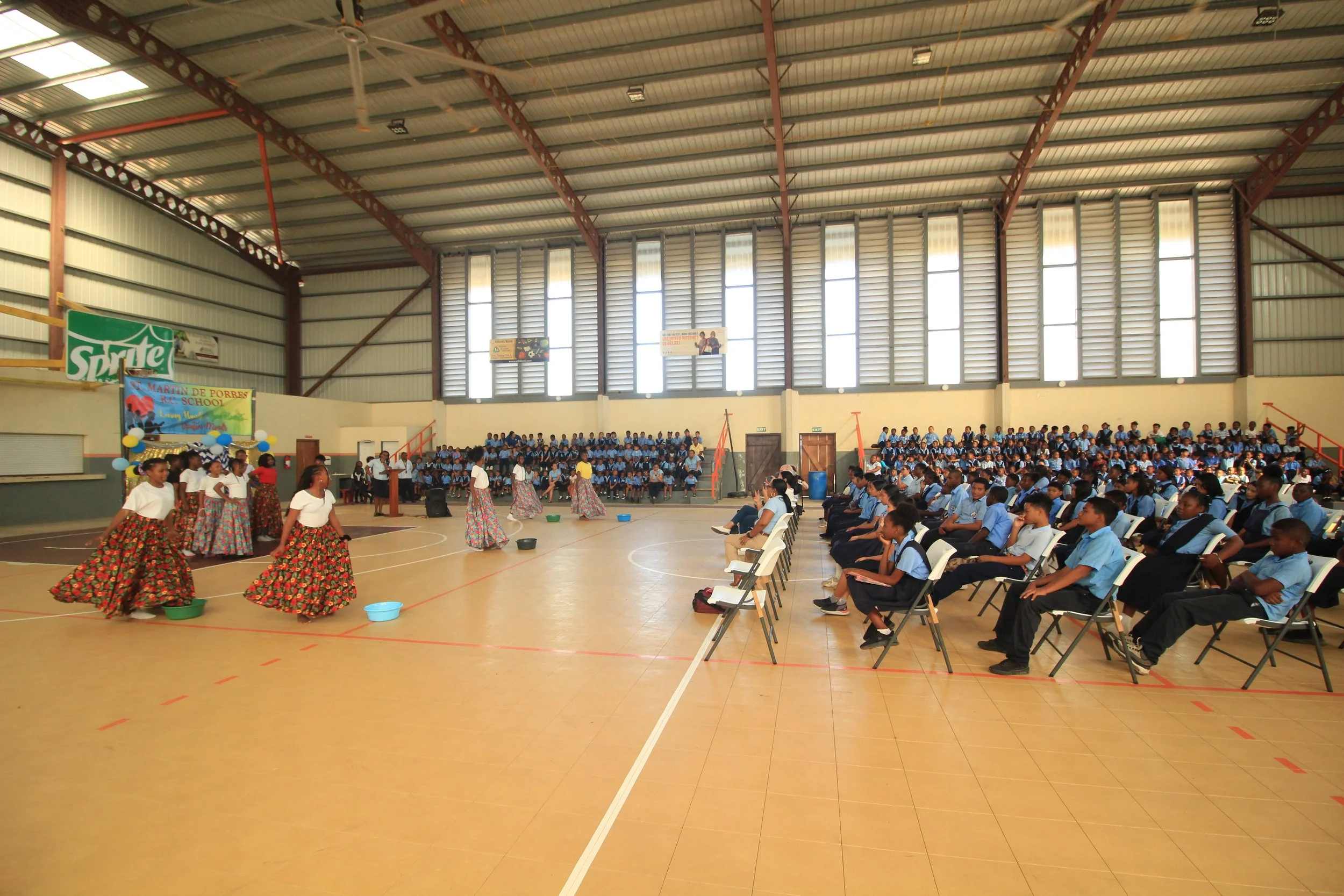
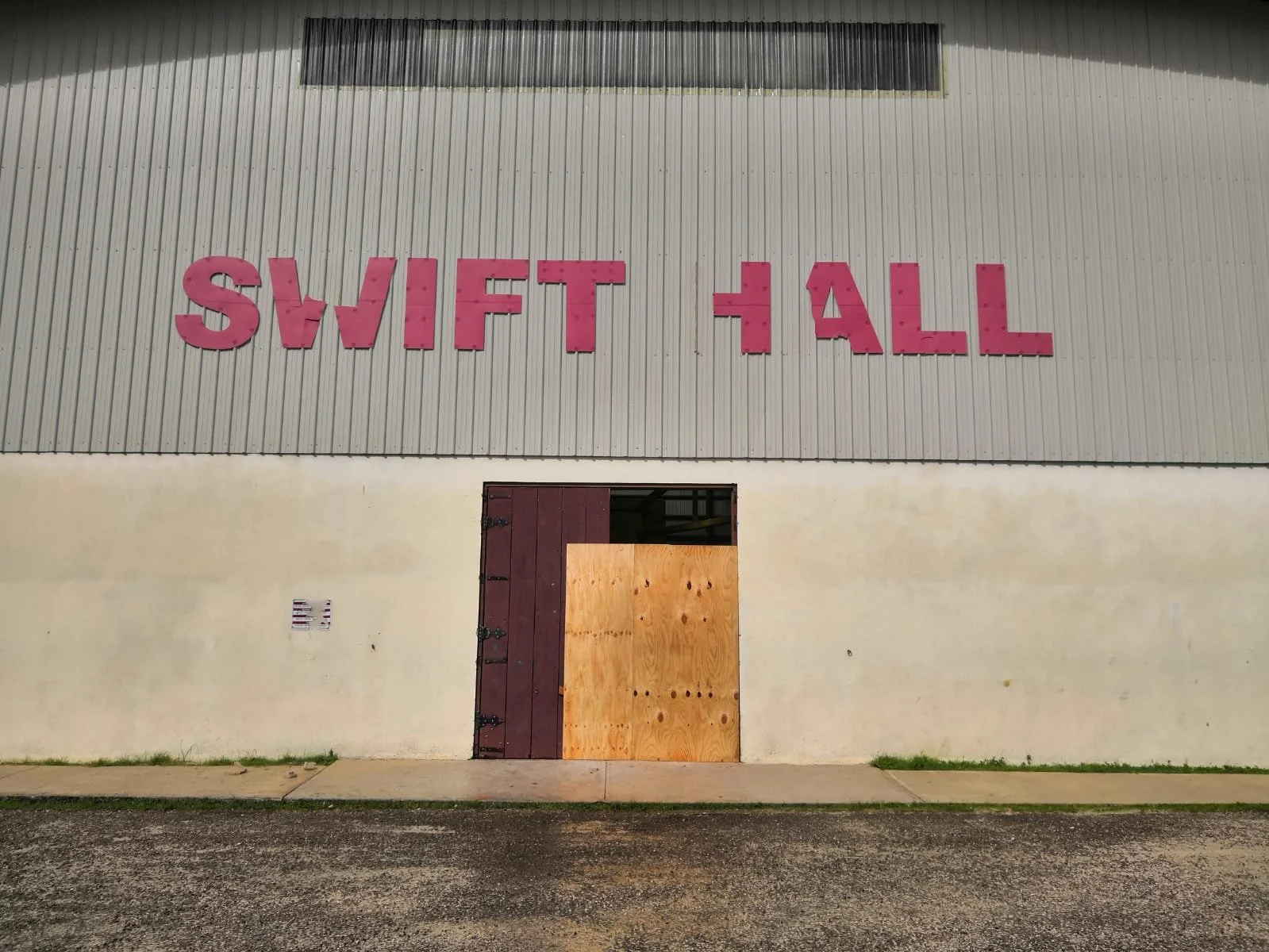
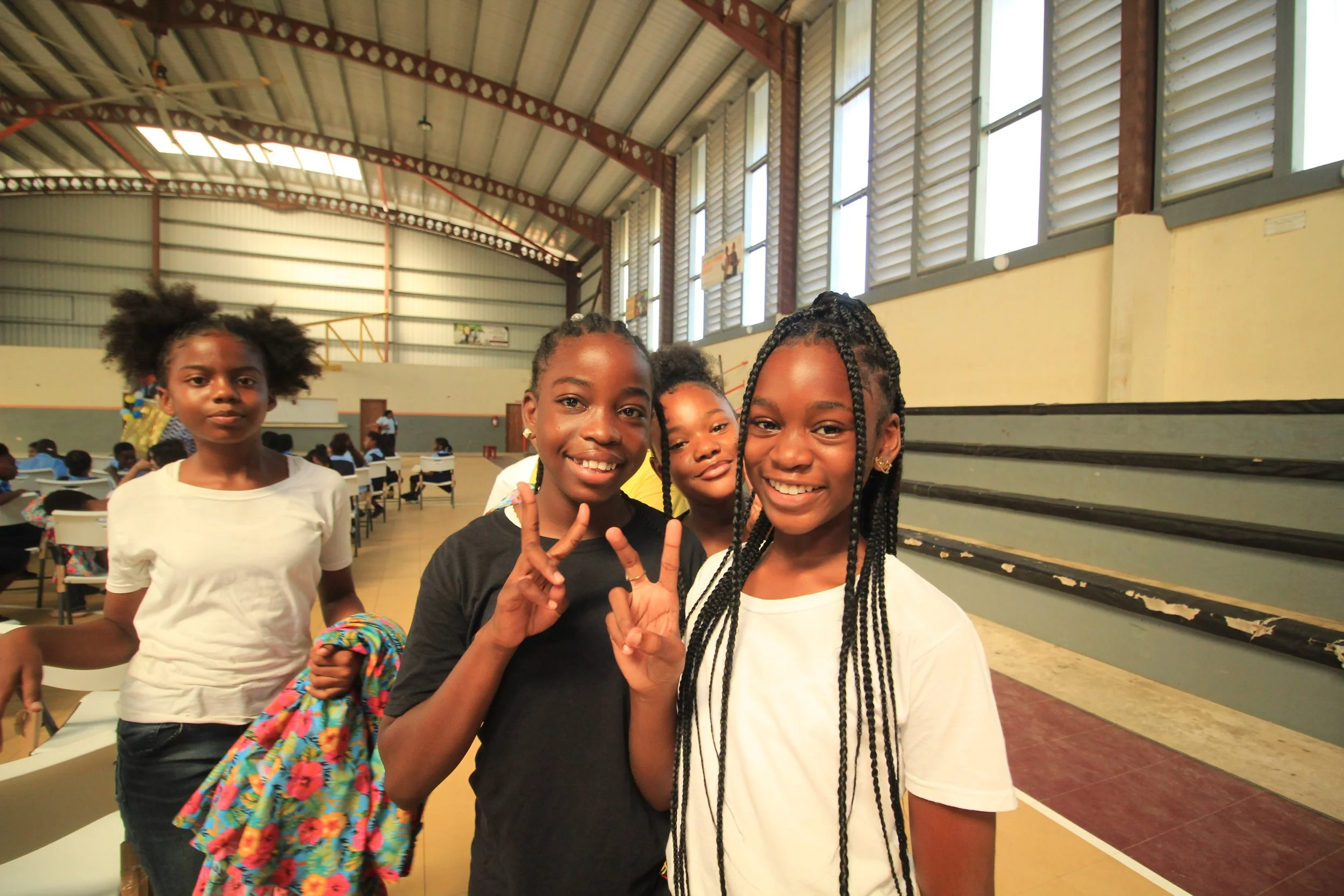
Student Assembly at St. Martin de Porres School: One of the most memorable moments was the student assembly and heartfelt performances by the students in Swift Hall, showcasing their talent and joy. Swift Hall is a cherished parish center and gymnasium for St. Martin de Porres and community hub for Belize City’s southside neighborhoods. Swift Hall’s construction was directly funded by Belize2020 partners in Belize and North America. The assembly was a proud moment for the teachers and staff, who continue to provide opportunities for the students to shine, despite the challenges they face. A big highlight was the signing of the “10 Years of Collaboration” banner by students, teachers, school staff, and Belize2020 volunteers at the assembly. It will be a treasured reminder of this partnership’s great work for years to come.

Visit to the Community Baboon Sanctuary: The retreat wasn’t all work—participants enjoyed a visit to the Community Baboon Sanctuary, where they encountered howler monkeys in their natural habitat. It was a reminder of the natural beauty and richness of Belize.

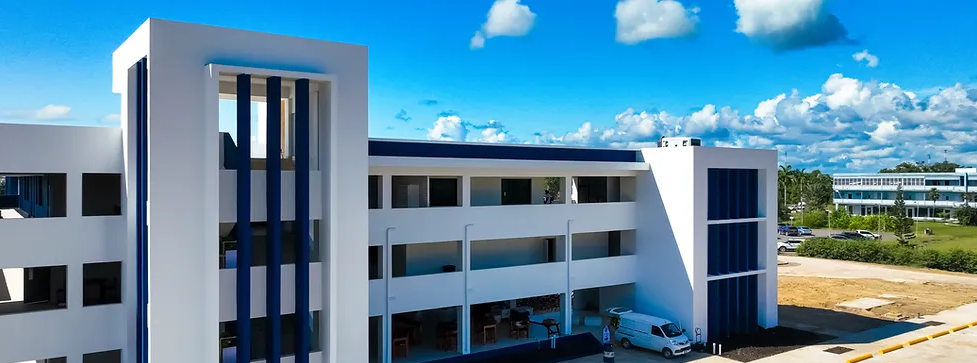
Welcome Reception at St. John’s College: The group was treated to a tour of the new Mirtha Alice Peralta Science Center at St. John’s College University , followed by a delicious dinner. This new facility stands as a symbol of the progress that Belize2020 has helped make possible over the last decade. The state of the art building will house SJC University’s new nursing and engineering programs.

Mirtha Alicia Peralta Hall is the latest addition to SJC University, offering modern facilities for science and nursing education, which will be supported by SLU. Named after the current president, this hall is the result of collaborations including SJC's new membership in the Association of Jesuit Colleges and Universities. It stands as a testament to SJC’s leadership, vision, and Jesuit tradition, which has played a deep role in shaping Belize’s history and national emergence.

Planning for the Future

The retreat included a deep dive into the future of Belize2020. Fr. Baugh led the group in a SWOT analysis (Strengths, Weaknesses, Opportunities, and Threats), allowing participants to brainstorm how to build on the strengths of the past 10 years while identifying areas for growth and improvement. Discussions were lively and focused on addressing key issues, such as:

  • Strengthening relationships and maintaining commitment

  • Expanding teacher resources and health assessments for students

  • Attracting new sources of income and younger team members in both Belize and North America

These conversations will shape the planning for the next 10 years. Belize2020 partners are planning a second Belize Summit at SLU scheduled tentatively for spring of 2025.

The planned summit will follow up on a historic event. In October 2015 in a celebration of solidarity and collaboration, leaders of the Jesuits Central and Southern Province, Saint Louis University, and St. Martin de Porres Parish gathered and signed a compact of cooperation to focus on early childhood education and counseling as well as annual SLU fellowships for Belizean educators pursuing graduate degrees.

Looking Ahead: A New Decade of Collaboration

As Belize2020 celebrates 10 years of progress, the retreat participants left with a renewed sense of purpose and excitement for the future. The next steps involve turning the ideas and insights from the retreat into action plans that will continue to strengthen Belize2020’s mission. The relationships built over the past decade, the programs established, and the trust developed within the Belizean and North American communities all point to a bright future. Belize2020 is ready to tackle the next decade, and we look forward to the continued collaboration that has been the hallmark of our success.


School of Education Marks 10-Year Collaboration with Partner Schools in Belize

By Saint Louis University School of Education 

In the summer of 2024, three Saint Louis University School of Education faculty members traveled to Belize to continue helping to improve the country's educational policies surrounding special education and support the teachers who work there. For two of these SLU faculty members, Jeannine Butler, Ed.D., and Jessica Leonard, Ph.D., this was a return trip to Belize. For Kristi Baker Patterson, Ph.D., this was her first opportunity to engage with our terrific colleagues working as educators in Belize.

In 2014, Archbishop Robert Carlson of St. Louis, who has since retired, requested that professors at SLU's School of Education provide support for educators in Belize, particularly in the areas of early childhood and special education. Assistant Professor Jessica Leonard, Ph.D., was one of the leaders of the inaugural SLU team that visited Belize and spent several days observing children and listening to their stories, fostering a partnership. Now, 10 years later, the partnership continues to flourish.  As a result of the Belizean Inclusive Practices Certification (BIPC) program that they helped create in 2023, Butler and Leonard were invited back to provide professional development focused on inclusive practices for teachers across the country of Belize. 

“Over the space of a week in June 2024, we reached over 250 teachers and administrators who have a commitment and interest in providing accessibility and equity to all of their learners,” Butler said. “Dr. Leonard and I expect to return to Belize indefinitely to continue to provide ongoing professional development and also to work as partners at the school level to provide requested support for individual administrators and teachers.” 

While the leadership of experienced participants who have been involved in this trip for years is invaluable, it is equally important to have fresh perspectives on the programs and potential areas for improvement —something Baker Patterson was able to delve into on this trip.

“This was my first time visiting Belize and participating in this partnership,” Baker Patterson said. “Beyond being a beautiful teaching and learning experience with some of the kindest people I’ve ever met, it is one that I believe was mutually beneficial. For their teachers, I was able to provide professional development on supporting struggling readers and providing strategies to work with learners exhibiting characteristics of various disabilities.”

Jeannine Butler, Ed.D., and Jessica Leonard, Ph.D., presenting a Belizean Professional Development Session.

Overall, SLU School of Education faculty members look forward to continuing this partnership. This trip continues to make clear that, while there are differences between the schools in Belize and SLU, educators also share many values in working to ensure the best outcomes for students. 

“Traveling to Belize each year renews my teaching spirit. The people are kind, friendly, and so thankful for little things we might take for granted every day,” said Jessica Leonard, Ph.D.  “I am thankful to SLU and the Belize2020 project that continues to support this amazing partnership of love, unity, and teaching for a higher purpose and the greater good.”

The words spoken by Leonard ring true for all attendees and the partnership as a whole.


Vital Water Tanks Quench Remote Schools in Toledo District

Reporting by Fr. Matt Ruhl, S.J. - Pastor of St. Peter Claver, Punta Gorda

The dry season in Belize has been particularly harsh this year, leaving many villagers in the rugged Toledo District struggling with water shortages. Basic necessities like clean drinking water have become scarce, with many village residents forced to bathe in creek water. The unusually dry conditions contributed to a drought across the region, record high temperatures, and wildfires have also broken out in parts of Belize.

Thanks to the support of Belize2020, four Catholic schools in remote Toledo District have received much-needed water storage tanks, bringing relief to students and their families.

“This year, the dry season has been so hot and so dry, I had to beg for water tanks to be installed in four of our village schools,” said Fr. Matt Ruhl, pastor of St. Peter Claver Parish in Punta Gorda. “This does remind me of the corporal works of mercy, one of which is to give drink to the thirsty.”

The first two water tanks were installed at schools in Dolores and Santa Cruz villages, with the remaining two installed at schools in Big Falls and San Jose. Once the tanks are filled by the local Water Board and the rainy season arrives, they will provide a sustainable source of water for the schools to use in the future.

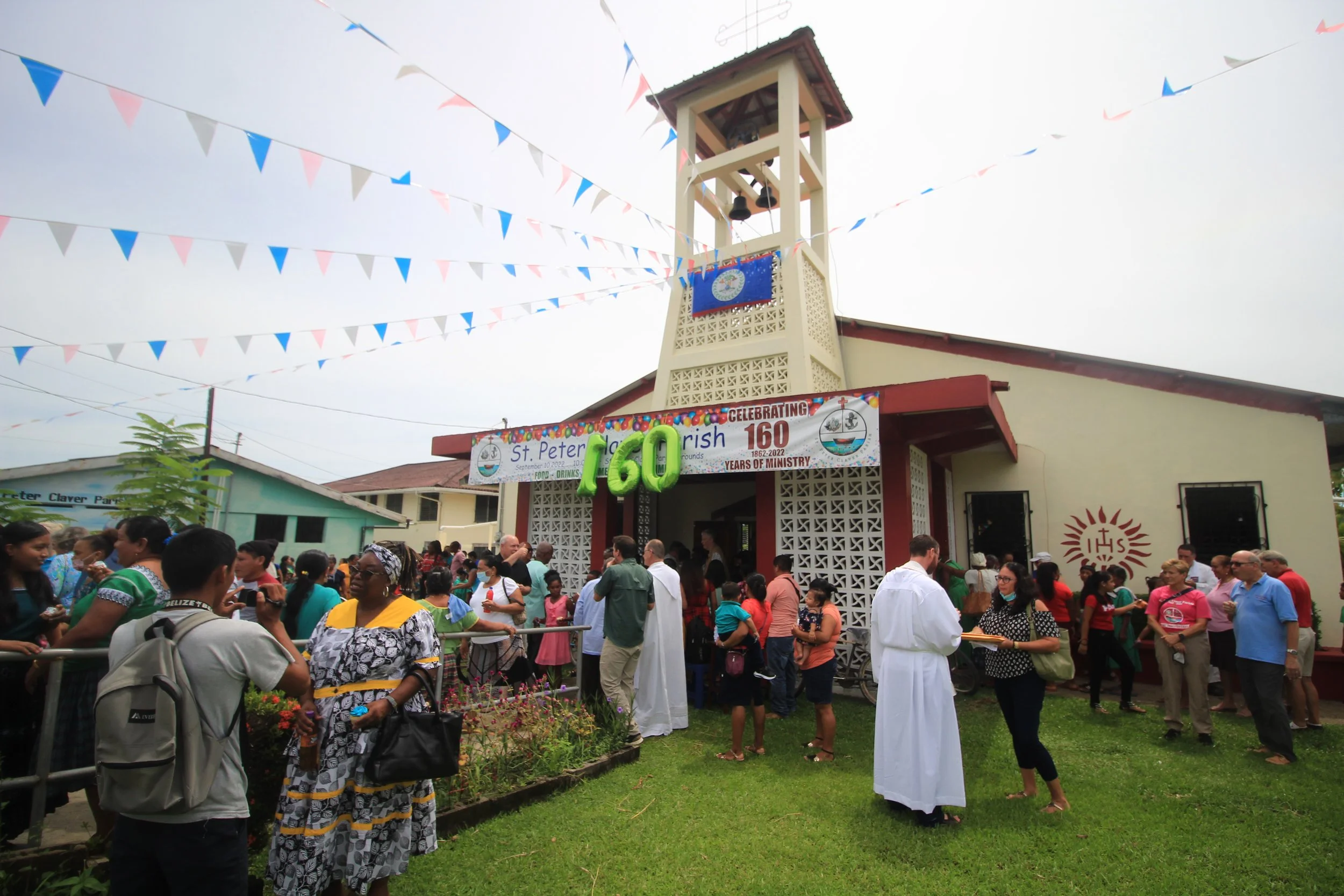
The Toledo District, with its rugged mountain terrain and remote Mayan villages, is one of the most challenging areas to access in Belize. St. Peter Claver Parish, established in 1862 as the first Jesuit hub in the country, serves as a central point for the region's rural Catholic churches and schools. The installation of the water tanks ensures that children attending these schools will have access to clean drinking water and water for their bathrooms, even during the dry season.

Belize2020 is proud to have fully funded this critical project. The installation of these tanks is just one example of how the Belize2020 partnership is able to directly and quickly support the needs of underserved communities in Belize to improve quality of life.

Kevin’s Journey: Collaborative Healing in Belize

By Mary Hastings Vatterott, Belize2020 Health Committee

I worked the last two weeks of January at the Hillside Clinic in Belize. While there, I visited the Mayan Ruins at Lim Ni Punit in Indian Creek, Belize. There, I met a young man who was limping and wearing sandals because of an obvious large growth on his foot. I inquired about this, he showed me, and I took pictures. I told him to come see me later that week at the Hillside Clinic, which he did.

View from Hillside Clinic in Toledo District, Belize.

It turns out this 21-year-old man had the tumor for 15 years, since he was seven years old. He had been to different places in Belize to get it removed but was told the only solution was to have his lower leg amputated. His family didn’t want this and refused to sign the permission for surgery. He had an MRI and an evaluation done in Belize, but the country didn’t have the resources to take care of him. We left it at that and took his contact information.

When I returned to St. Louis, I searched the different medical mission groups I knew for someone to see him. The World Pediatric Project here in St. Louis had an office in Belize, and when I contacted them, it turned out they had an orthopedic group coming to do surgery in early March! They were able to get his medical records sent electronically to the group of US surgeons, who agreed he was a possible candidate for surgery. He and his brother were set to travel north to Orange Walk with the assistance of Hillside, who helped facilitate my communication with the World Pediatric Project team.

In March, the surgeons successfully removed the tumor, and after a couple of days, Kevin was released from the hospital. His flight back to Punta Gorda was paid for by the Rotary Club. He will follow up with a nurse in Punta Gorda and Hillside Clinic, where he can get Physical Therapy and canes if needed.

Fr. Matt Ruhl appointed to Chair of the Bishop’s Commission on Education in Belize

By Matthew Ruhl, S.J., Pastor - St. Peter Claver Parish - Punta Gorda, Belize

A few months ago, I was asked to be the Chair of the Bishop’s Commission on Education after voicing concern to the General Manager of Catholic Schools, Celia Usher, about the economic future of Catholic primary education in my Parish. The Parish consists of 29 schools, 239 teachers, 4,054 students, and 110 buildings, all suffering from deferred maintenance. Celia listened to me and said, “Well Matt, if you multiply your problems by six (as in six districts in the country), you have my problems.”

“Celia,” I asked, “What’re we gonna do?”

She replied, “Well, I don’t know what you’re gonna do, but I know what I’m gonna do. I’m gonna get you named Chair of the Bishop’s Commission on Education, so my problems become our problems.”

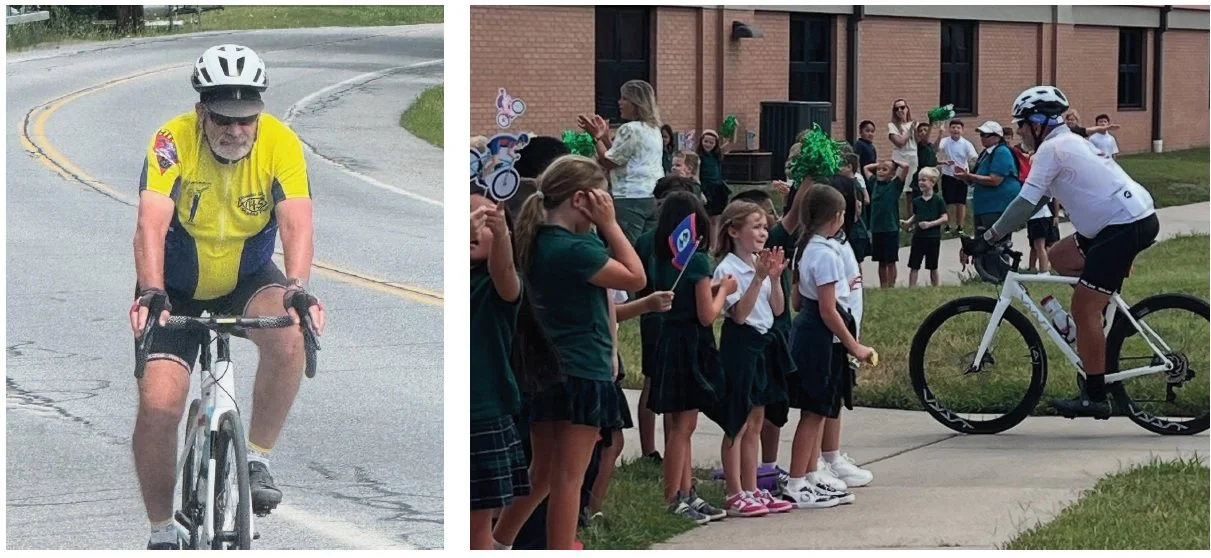
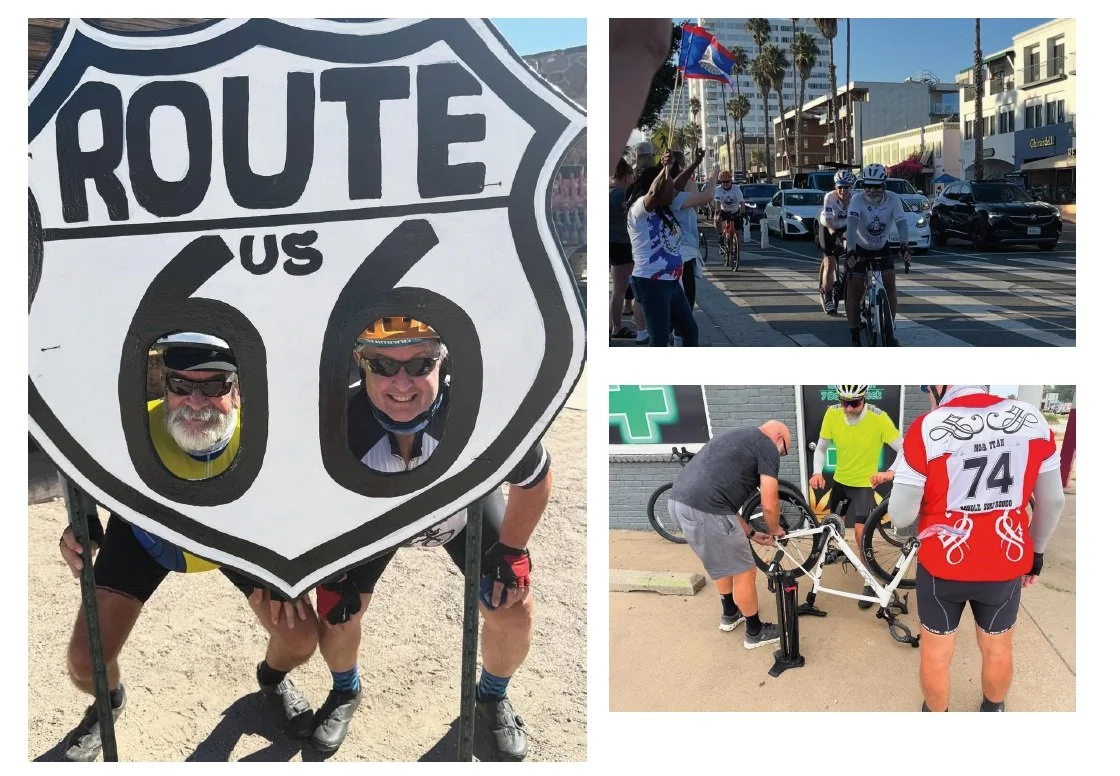
So now I have 112 schools, 1,600 teachers, 32,000 students, and 432 buildings to worry about. Our primary goal is to get Catholic Primary Education on firm financial footing by September of 2026. To do that, we must undertake a five-million-dollar campaign to endow the Catholic School System of Belize. The campaign will be wrapped around The Lighthouse Ride, a coast-to-coast ride across the USA from June to September of 2025.

Our team of volunteers already has me on Instagram and Facebook and will soon launch a website through which contributions can be made. I will be touring the USA at different intervals from now until September of 2026.

In the meantime, we have instituted The Lighthouse Walk. Around every Valentine’s Day, our 32,000 children undertake walks around their village, town, or neighborhood, with the theme ‘Fall in Love with your Catholic School.’ Last Valentine’s Day, our children raised $60,000. Belize2020 is helping out right now with counsel while they consider how they might get more involved.

SLU Chaifetz School of Business Students Belize Immersion Trip

By Brittany K. Ludwig, Director of Academic Advising - Richard A. Chaifetz School of Business

In Academic Advising, it can be easy to neglect experiential learning. As someone who’s worked in the advising field for more than ten years, I find myself getting caught up in the daily routine of keeping students on-track for graduation by checking off boxes and relying on the comfort (read: laziness) of transactional advising. When I agreed to participate in the Saint Louis University Chaifetz School of Business Belize Immersion in March 2023, I was ready to mix up the mundane a little bit. In preparation for the trip, I focused on my self-defined role as an administrator and support to my colleague, Dr. Ben Smyth. Let’s get them there, keep them safe, get them home… that was my vision of my duty to my fellow travelers. After months of planning, a few pre-trip meetings, and a very long day of travel, we safely and sleepily arrived in Punta Gorda.
Of course, the students were destined to participate in plenty of learning experiences. Ben’s planning as well as his connections to and communication with Belizean community partners well assured this fact. They had things to do, people to meet, and projects to complete. Although less tangible, but equally impactful and more organic, is the cognitive and personal growth of those who’ve experienced international immersion. In my experience, I felt like a newborn giraffe – I stumbled a bit, and my eyes were newly opened, but I learned very quickly how to stand, then, with gentle guidance, how to run and survive.

These students, by contrast, had eyes that were already partially opened, and they were significantly less maladroit than me on my first international trip. Many of these students are part of the Chaifetz School’s Service Leadership program and are advised, by Dr. Smyth, on community engagement, social change, and ethical leadership. As a result, their international competency and cultural humility was evident in their interactions with the people of the Punta Gorda community.

I was pleasantly surprised that these students were focused on engaging in genuine conversations, as equals, with community members - their questions were not contrived or condescending. These students were not as interested in Instagram photos as they were eager for cultural connections. The economic differences were obvious – the students saw poverty among these people. In those same faces, they also saw bliss, resilience, character, playfulness, and courage. At the end of each day, Ben and I took time for reflection conversations and/or examens with the students. A recurring theme that the students noticed was the joyfulness of the Belizean people. In recognition of challenging circumstances of the community, the peoples’ venerable spirits and unshaken faith were well absorbed by all of us.

These students WORKED. They were hot, they were sweaty… The end-of-day, not air-conditioned van rides on the unmistakable Belizean rural roads were, I will politely say, “fragrant.” The first leg of the trip was labor-intensive (literally). The students worked on cacao and turmeric farms and built a wall at St. Benedict’s Catholic School. They labored with the same joy they saw each day in the faces they met, modeling the behavior of the locals of Punta Gorda without complaint. The second leg of the trip was geared toward business education.

The students spoke with entrepreneurs, suppliers, manufacturers, and farmers. They learned about finance and capital generation, personnel, supply chain management, and marketing. Generally, Saint Louis University Business students are well-versed in these themes from freshman year, but their encounters are limited to urban, industrialized areas. In Belize, these students were able to focus on sustainability and business in developing countries, which was eye-opening for all of us.

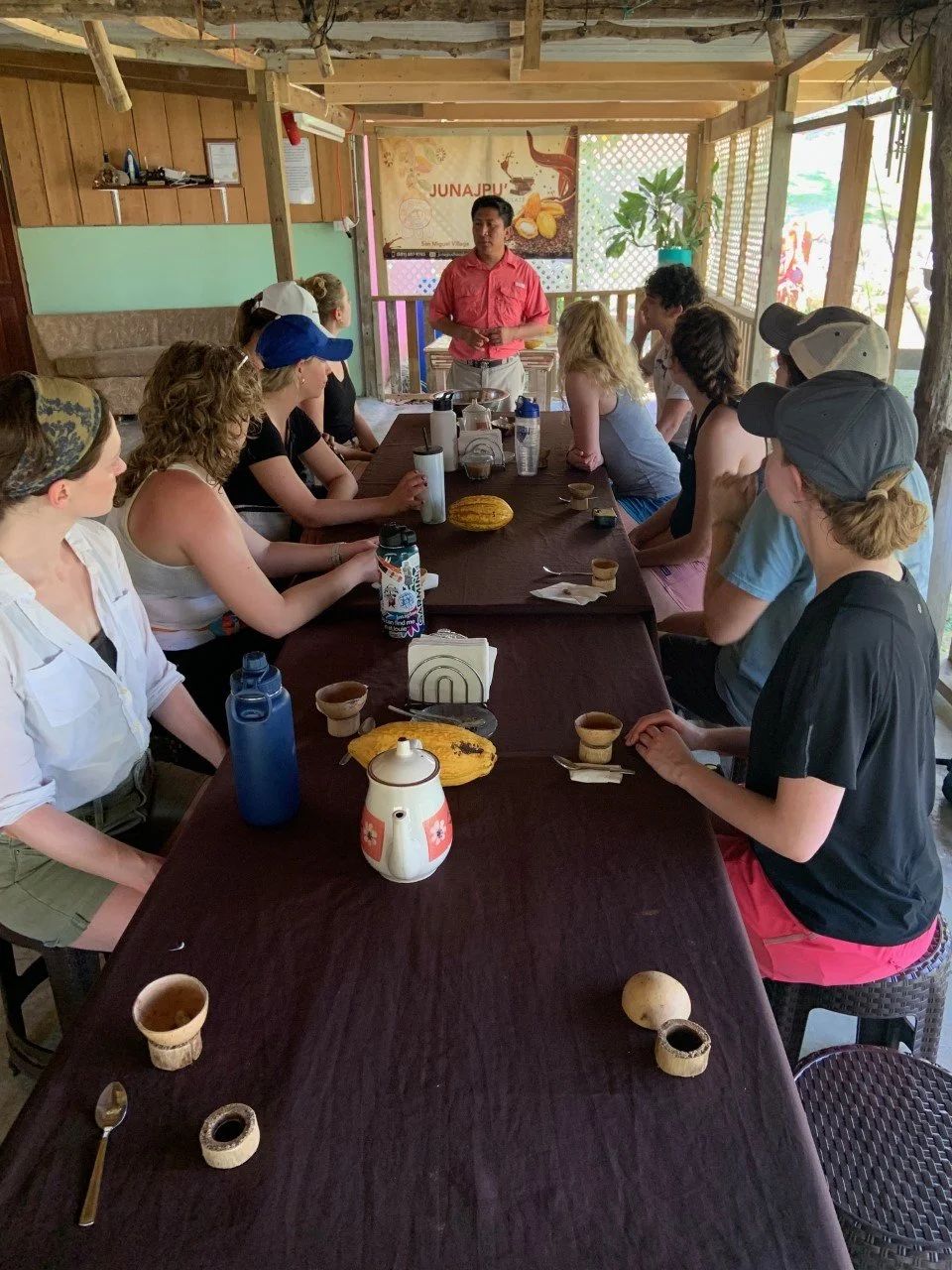
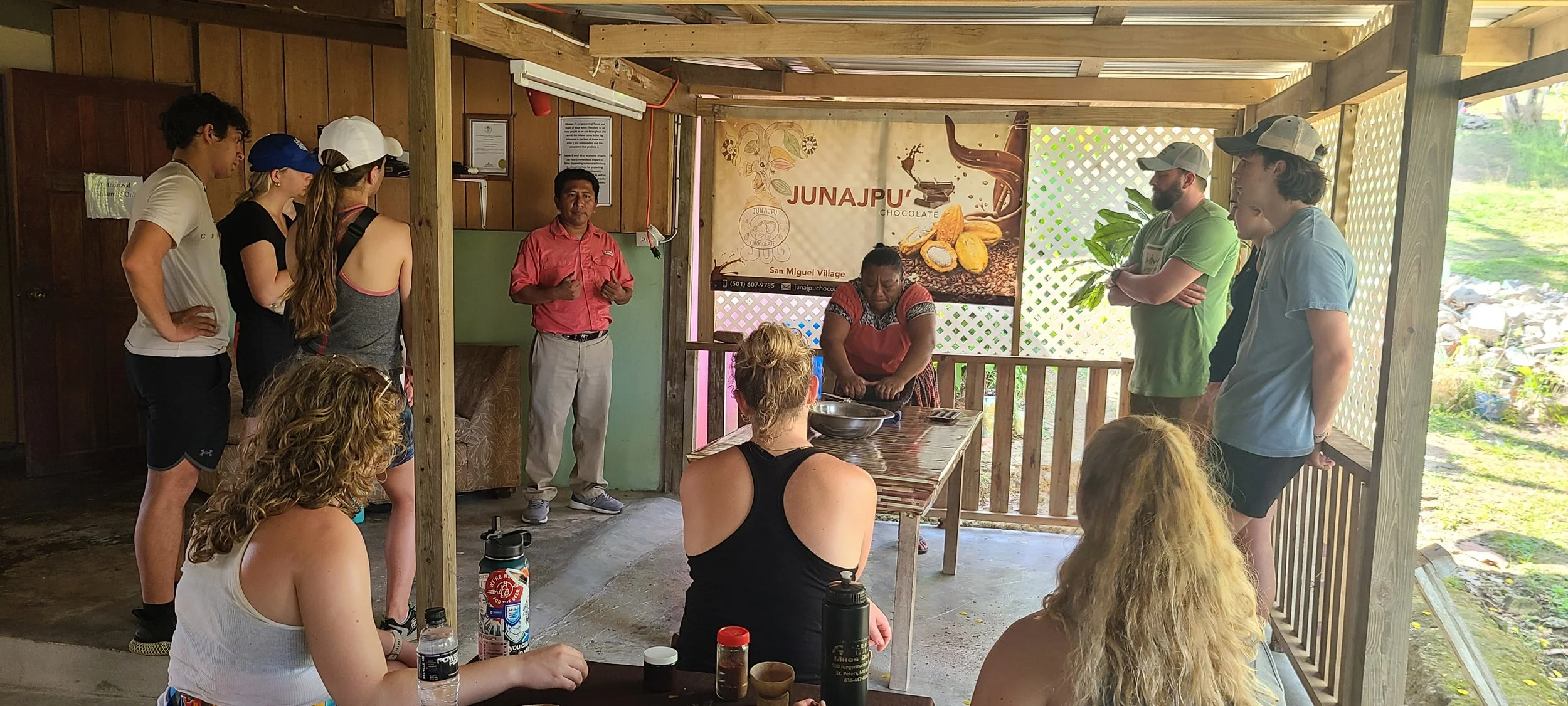
In reflection, the students especially appreciated the prominence of women leaders in a few of the businesses we visited. Cacao Junapú, which is largely managed by husband-and-wife team Andrea and Martin Ack, was a highlight for the students. They learned about cacao production in Belize from bean to bar as well as the cultural significance of cacao to the Maya people. We visited Naledo the next day and met the founder/owner, Umeeda Switlo, a woman who is simply larger than life – an entrepreneur, refugee, widow, mother, and teacher. Her captivating story silenced our characteristically chatty group as they hung on every word of her spoken autobiography.

Storytelling is clearly central to Belizeans, even in their business management. The farms, companies, and factories we visited were grounded in rich cultural narratives, deeply important to all members of each organization.

On the whole, my professional perspective on academics shifted significantly on this trip. As a higher education administrator, I learned that experiences like these are the heart of academics and transactional advising (“take this class, not that class”) is no longer part of my daily practice. As I watched the students dance, laugh, engage, and connect with a culture, it reminded me of why I started working in higher education – seeing them grow and discover is truly exhilarating for me.

The students saw me as an educator, and I learned quickly that I was not there to tell them “This is how to fill out your customs form” and “Let’s get through security without hassle.” Through this immersion, I feel rejuvenated, and my Imposter Syndrome has taken a back seat – I brought valuable perspectives and conversations and I felt like I belonged on the trip before too long.

Professional development aside, I fell in love with this place and the people in it. The soul of the community is embedded in a rich cultural history that I am ashamed to admit that I had not previously explored before my involvement in this trip. From an academic perspective, I was enthralled by the anthropological history of Belize; but I am so grateful to have also experienced the unambiguous sensations of love, community, and, as our students noted so astutely, joy.

2022-2023 Year in Review - St. Martin de Porres Primary School

By Gina Fonseca, Assistant Local Manager - St. Martins Des Porres Middle School, Belize City, Belize

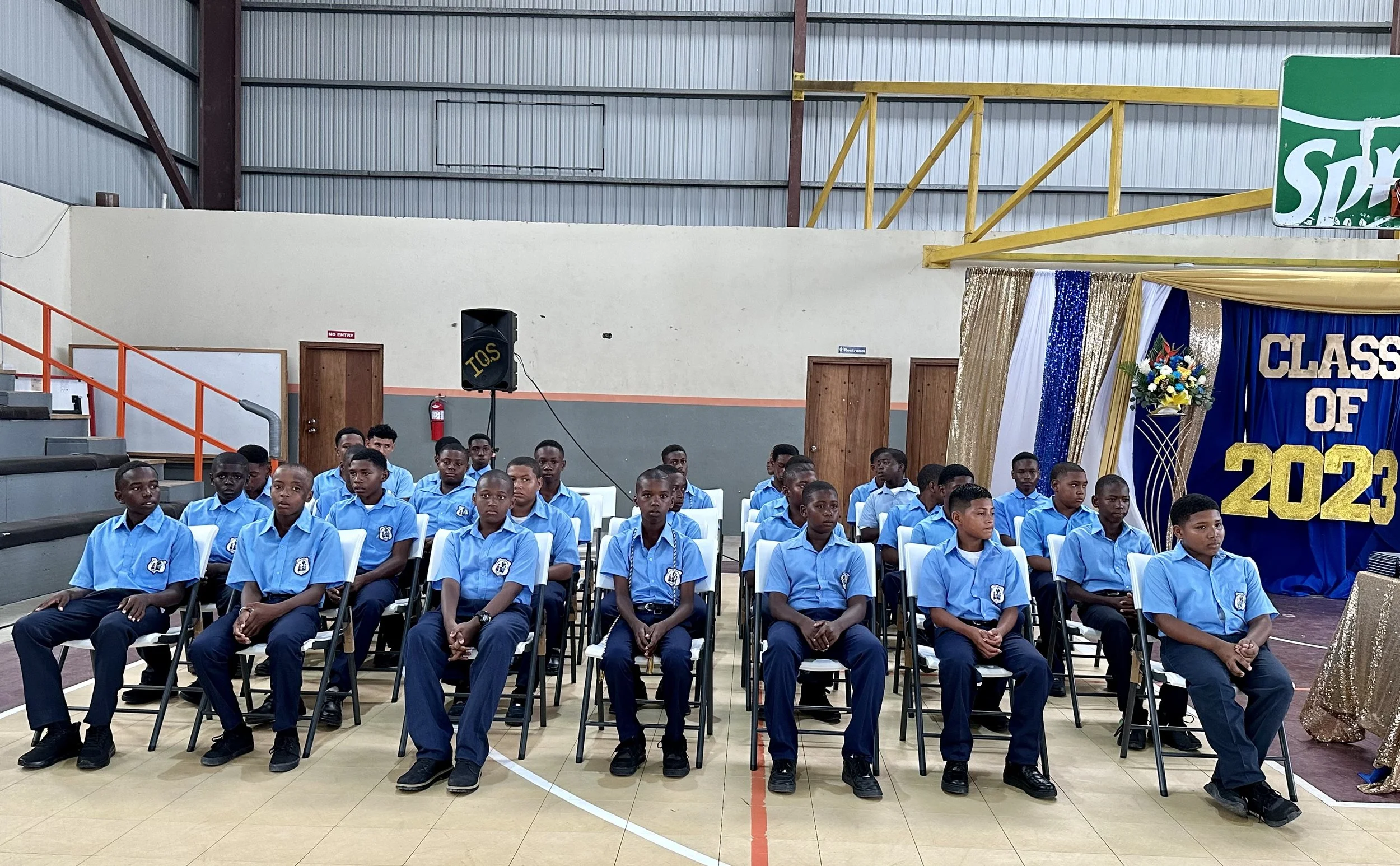
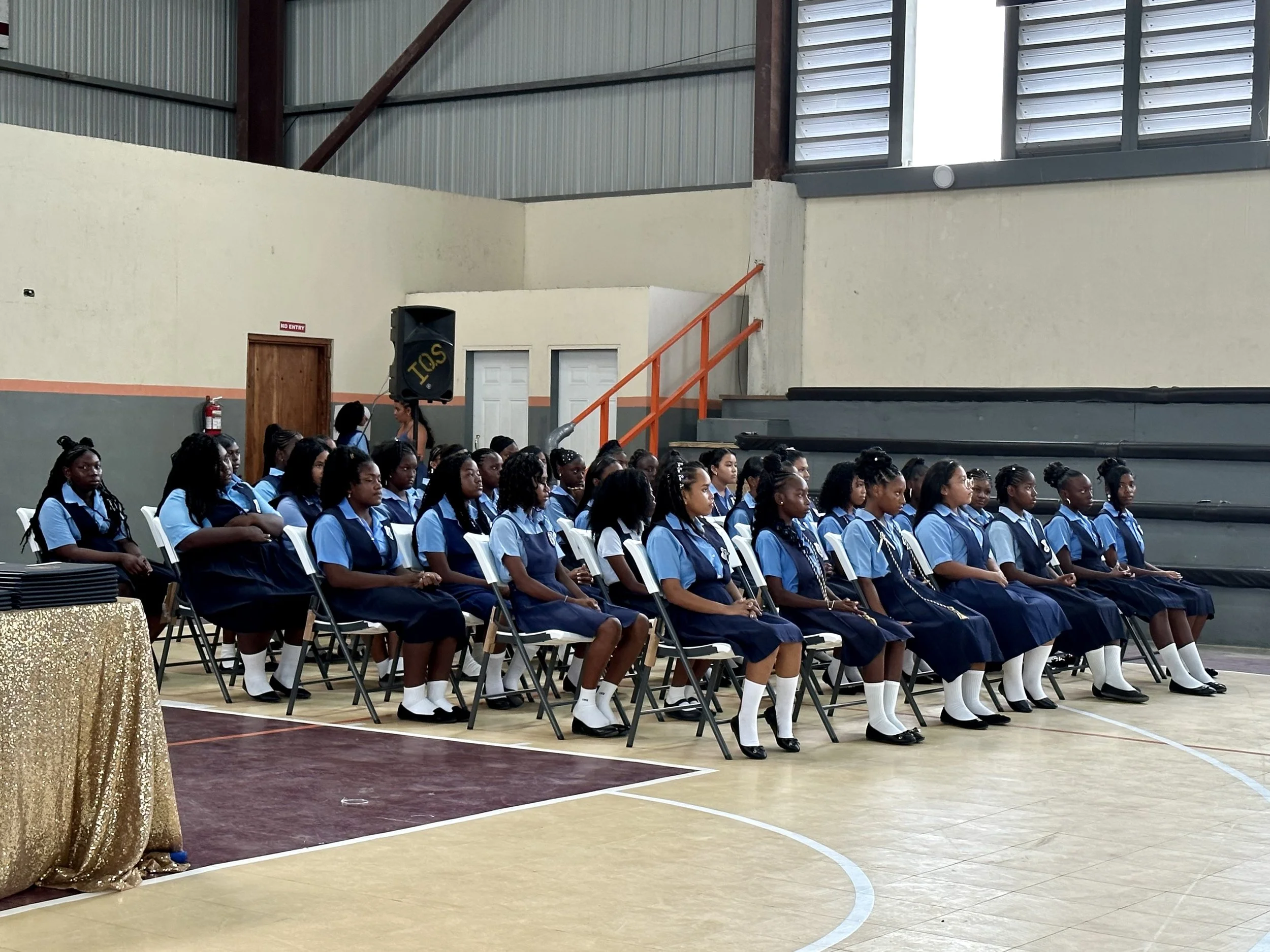
It’s June 22, 2023, Swift Hall is buzzing with excitement and promptly at 4:15 pm, the familiar tune of “Pomp and Circumstance” fills the air. 78 nervously beaming Standard 6 students make their way into the auditorium and march up the front to take their places of honor. It is a good day. We are proud, we are blessed, and we are grateful. The ceremony marks the end of another academic year for St. Martin de Porres R.C. School, and what a year it has been!

So much has happened since the school year commenced last September with an air of uncertainty as we all grappled with our post-pandemic reality. What is the new normal? Are we prepared? These were just a few of the questions lurking in the backs of our minds, but we dove in headfirst. We have had our share of challenges, but we have had many highlights as well.

The main event was graduation. Our graduating class this year consisted of 36 boys and 42 girls, 73 of whom are moving on to high school. A few of the graduates have already enrolled in one of the four high schools which are now offering a completely free high school education. These high schools are Maud Williams High School (4 students), Sadie Vernon High School (7), Gwen Lizarraga High School (9), and Excelsior High School (2).

Since last year, these four schools have started to provide a free education including books, uniforms, and daily meals. This will alleviate the financial burden on our parents.

Other students have also enrolled in high schools such as St. Catherine Academy (11 students), Wesley College (4), Pallotti High School (7), Anglican Cathedral College (9), Nazarene High School (12), and Edward P. Yorke High School (8).

The Minister of Education, in his keynote address to the graduating class, pledged a government scholarship to all those who have been accepted to these schools, but cannot afford to attend. The future looks bright!

Our graduates are not the only ones shining this year. St. Martin’s has done well in the area of sports as well! Our female football team took second place in the Bishop’s Cup while our male team barely missed the playoffs.

Here’s the text reformatted without any additional words, ready for easy use:

Aside from sports, our school also shone by placing second in the National Spelling Bee for the Belize district. We are extremely proud of Dane Flowers, one of our graduates, who represented us well. We also danced our way to a Silver medal in this year’s Festival of Arts competition. All these extracurricular activities have shown the immense potential we have to share with the world.

Some other notable achievements for our students this year also include improvements in the area of literacy which is essential for overall academic performance. 50% of students from Infant 1 - Standard 2 are at their reading level and 66% of students from Standard 3 - Standard 6 are at their reading level. This is a commendable achievement since these students lost 2 years of learning due to the pandemic. Our teachers are really working hard to bring them up to their respective levels. We are also reporting a 77% overall pass rate for this school year. We are proud of the efforts of our entire school community - teachers, students, administration, and parents - in making up for lost time. The efforts are paying off.

In terms of Social support, we have had 60 students enrolled in counseling and currently have 135 students in our feeding program. The school hopes to improve on these numbers for next year. We are committed to offering as much support as we can in these areas.

St. Martin’s continues to move ahead embracing both the challenges and opportunities that come our way. As we anticipate the upcoming school year, we are charged with resilience and filled with hope.

Belize Apostolates Damaged by Hurricane Lisa

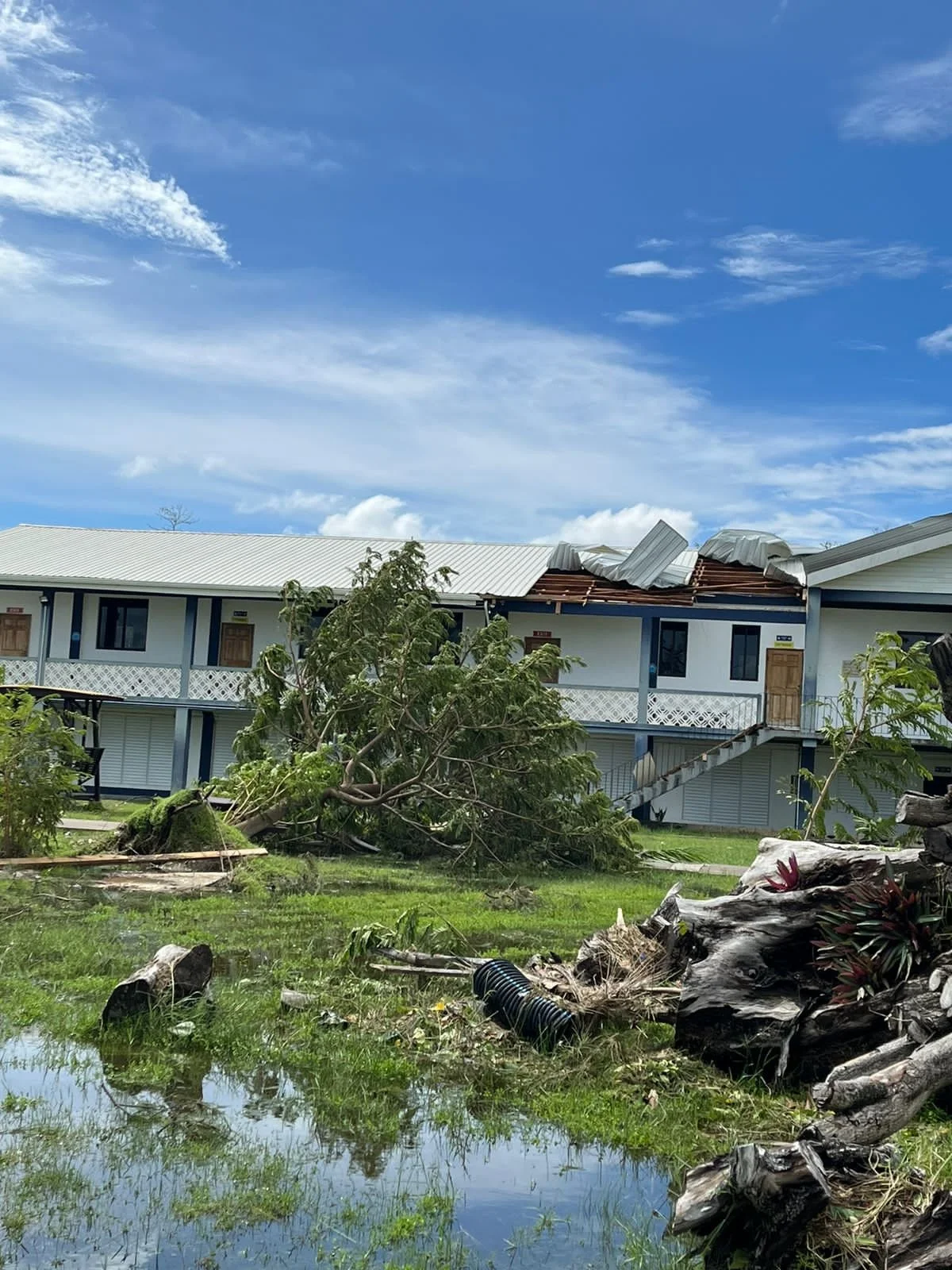
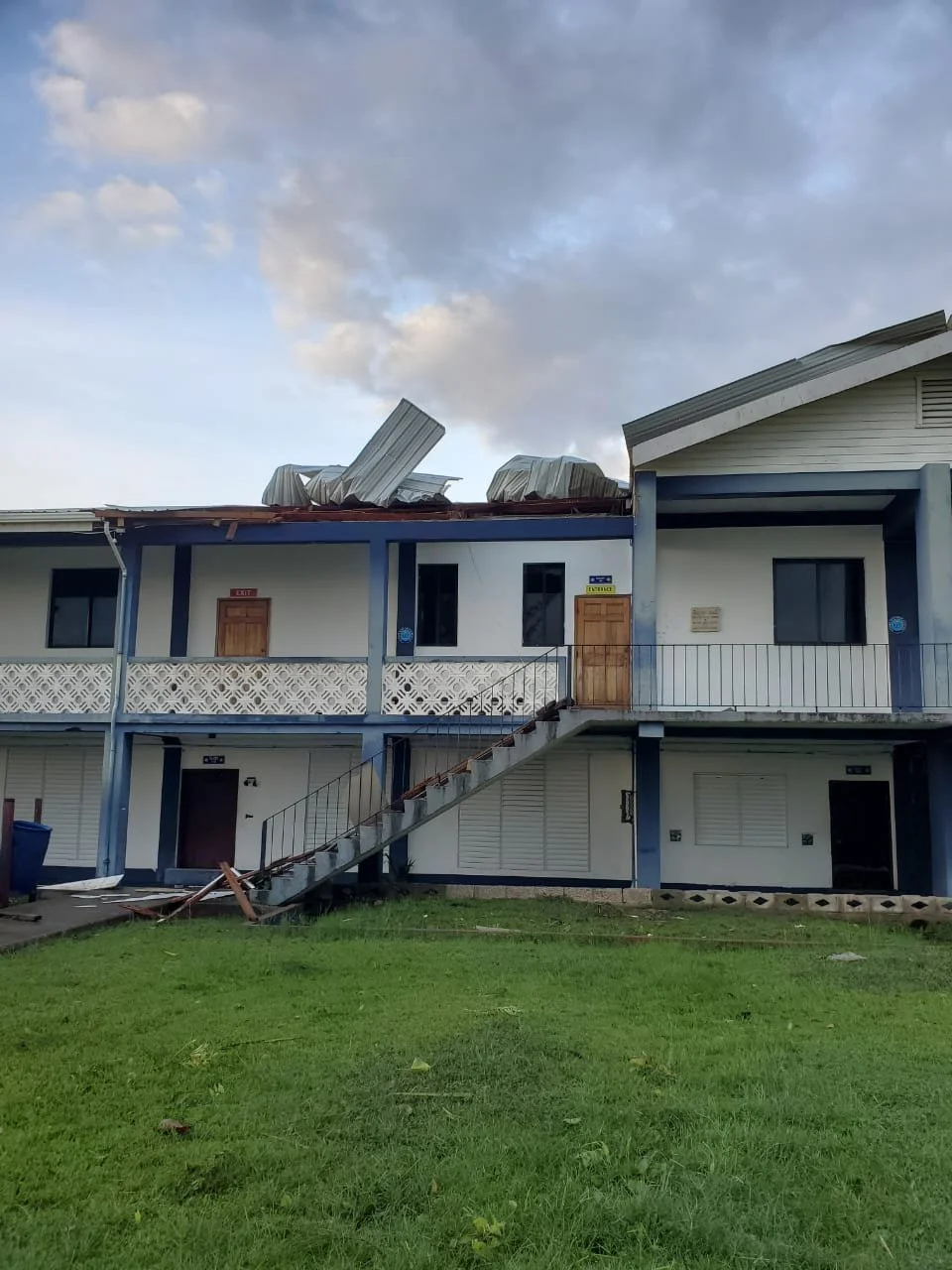
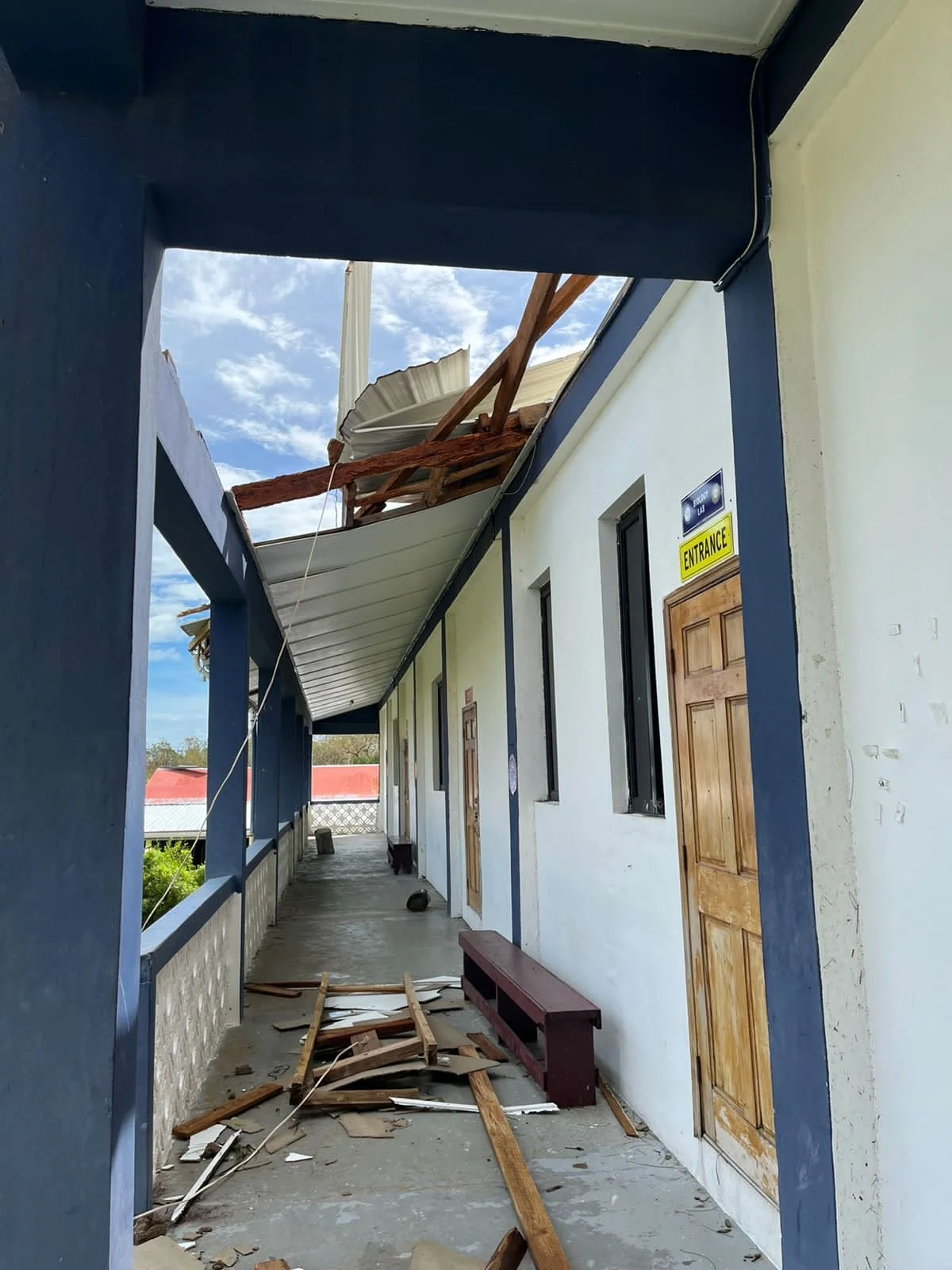
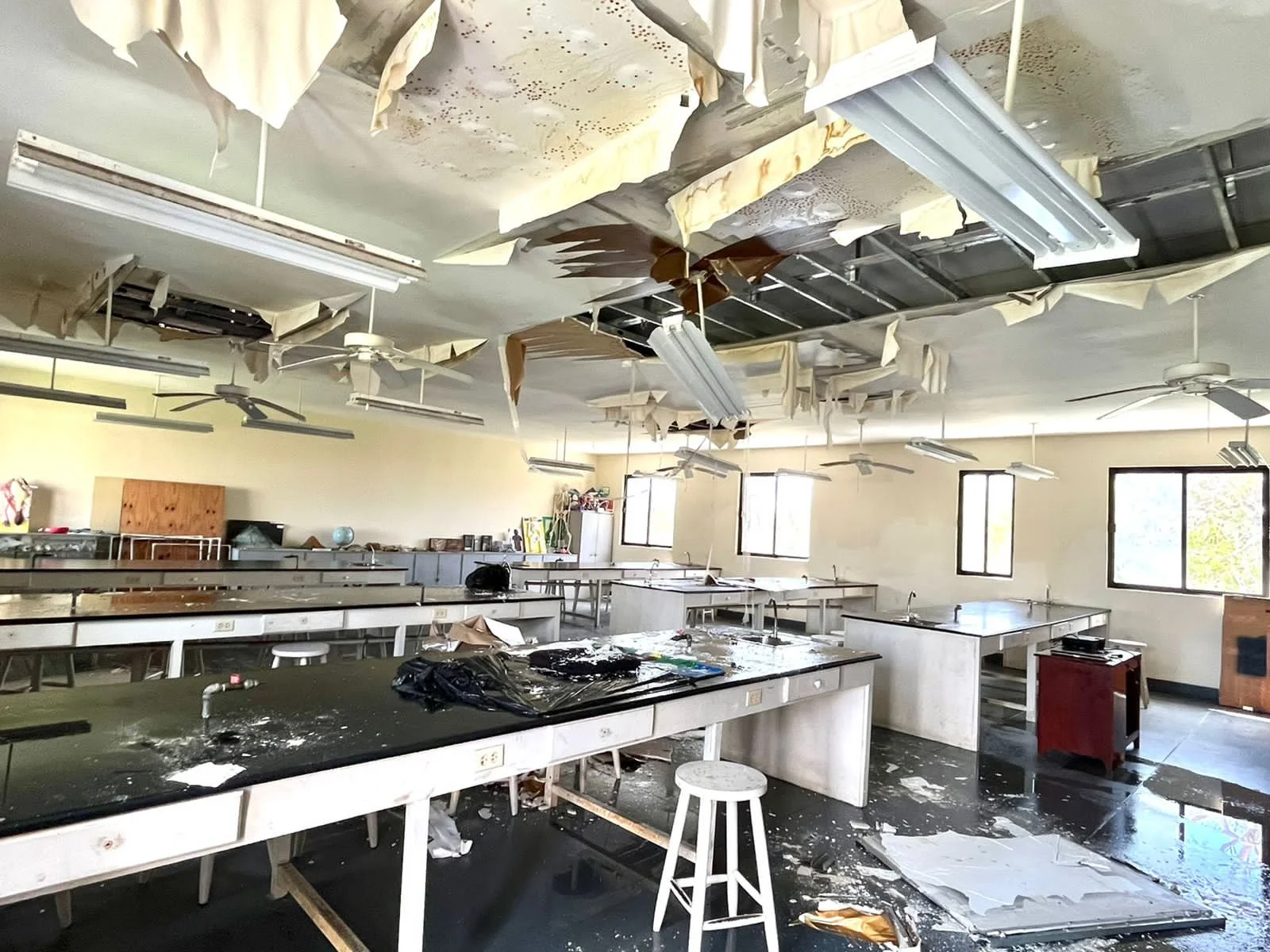
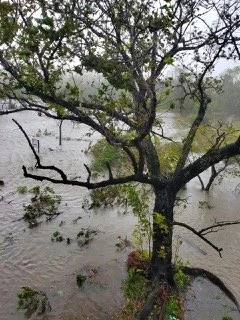
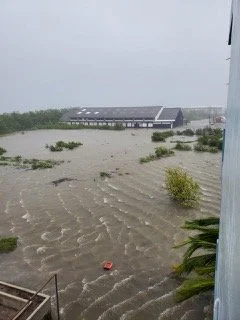
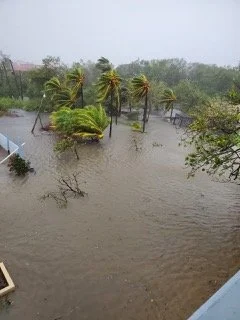
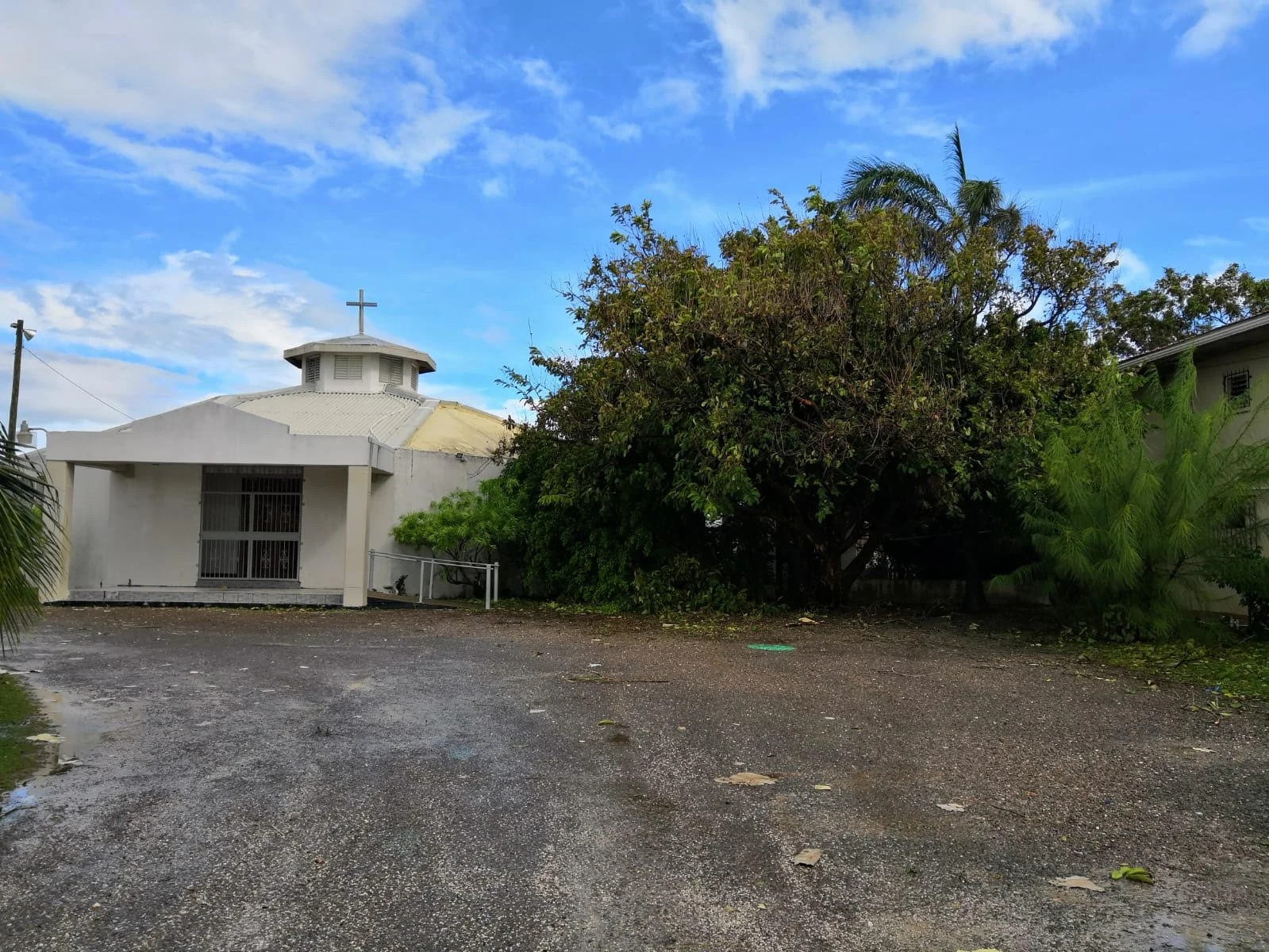
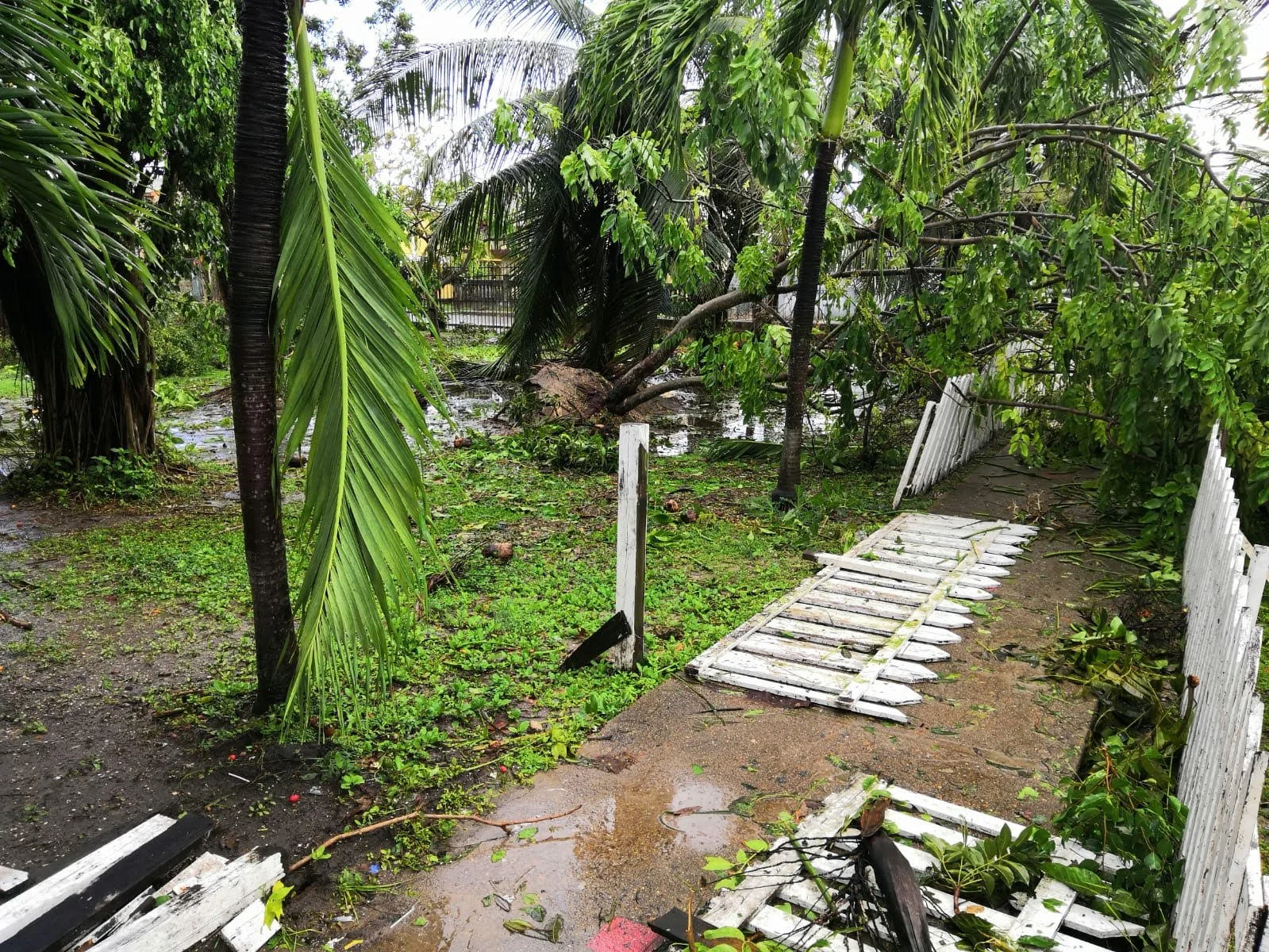
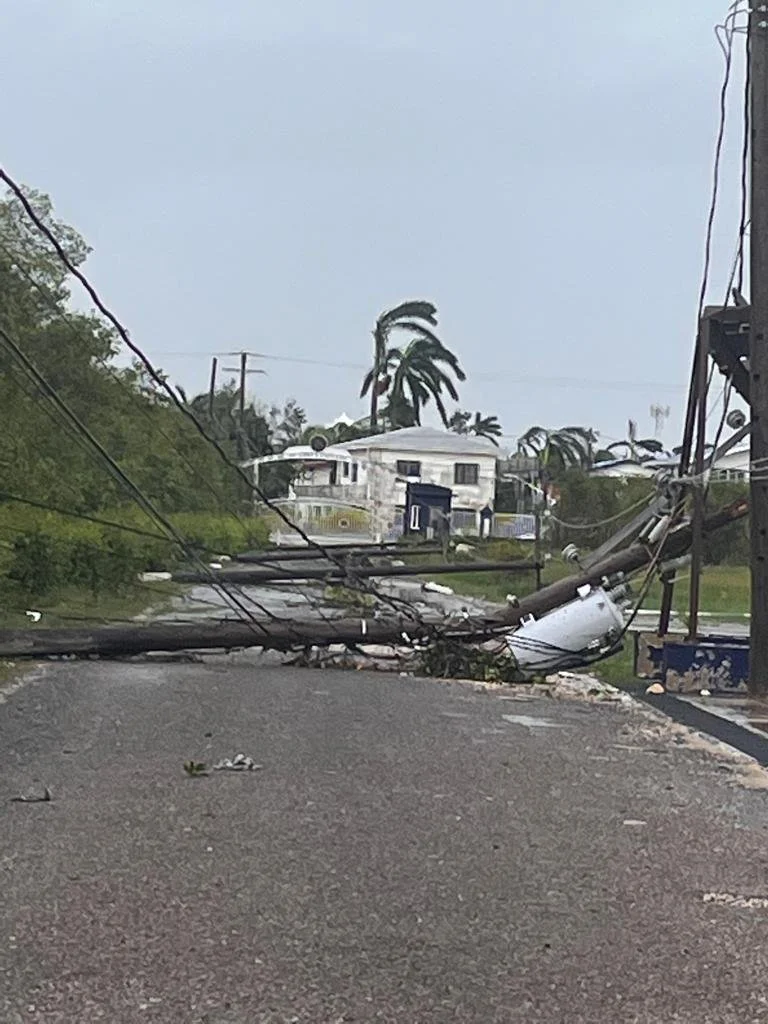
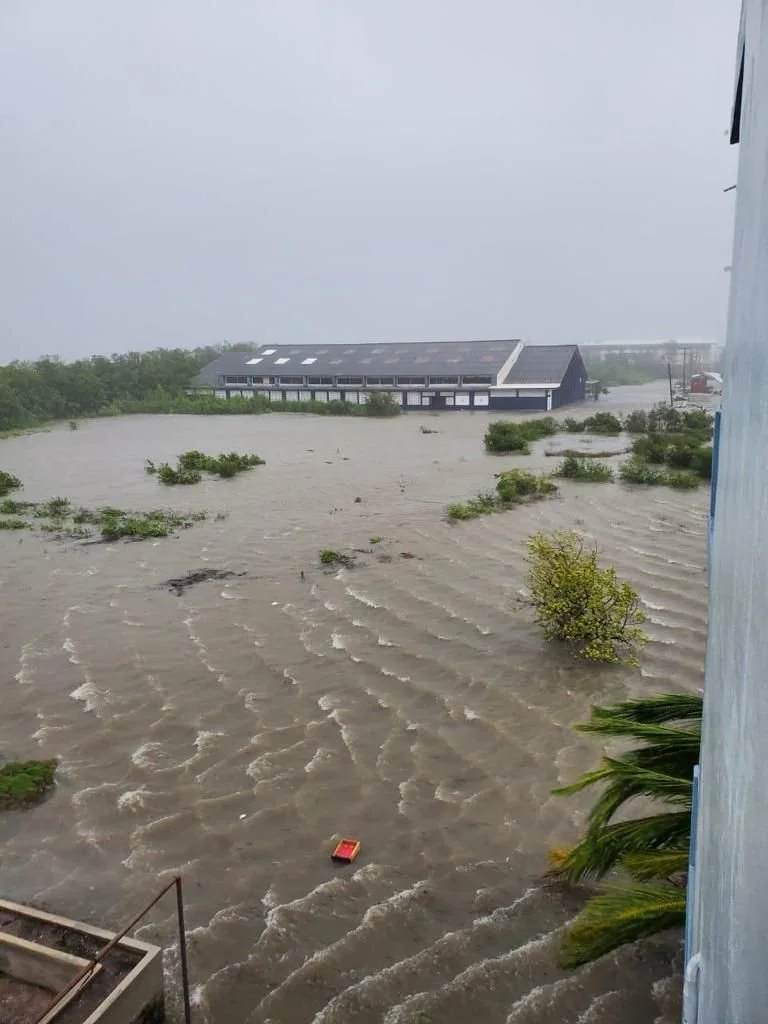
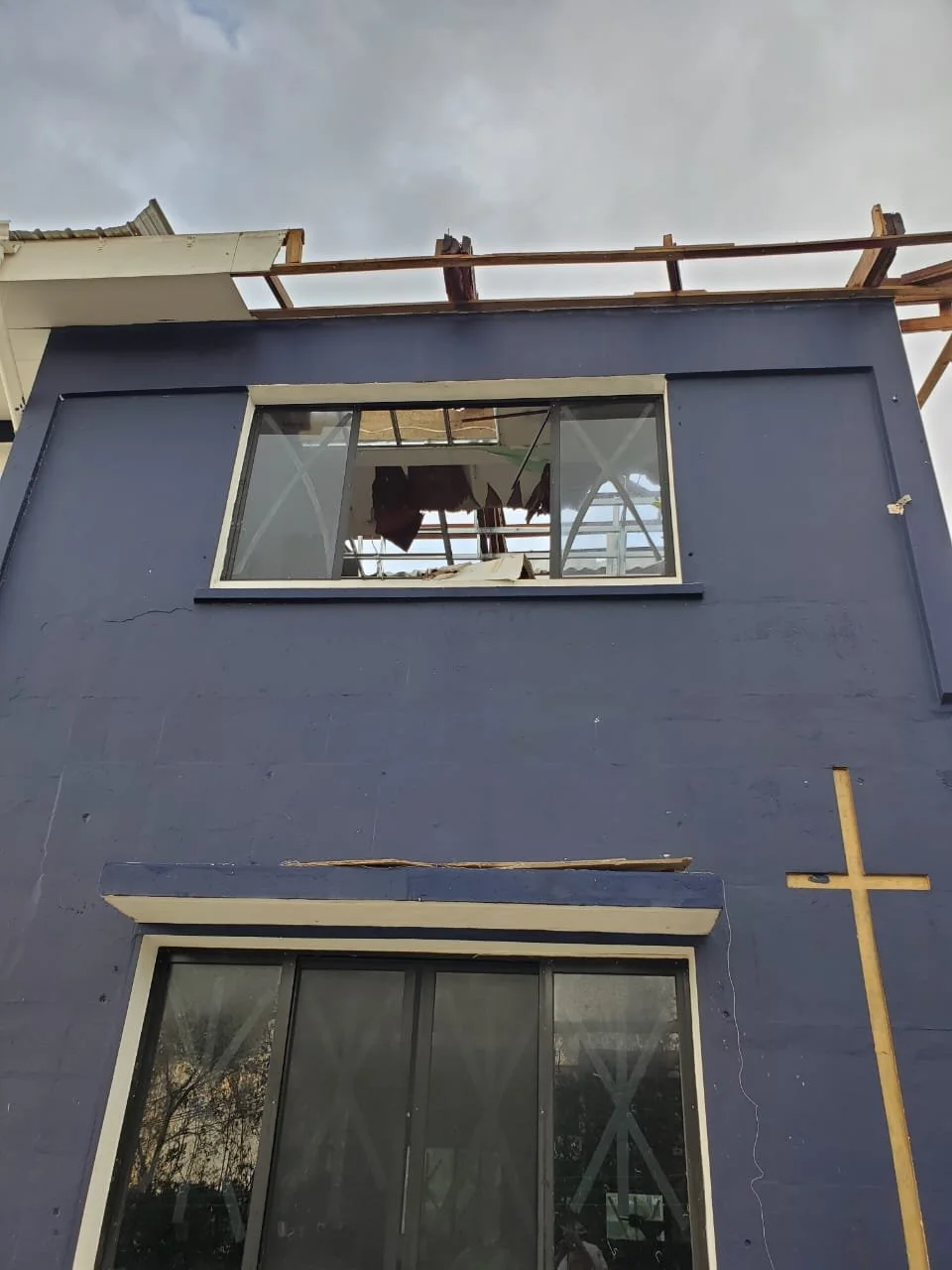
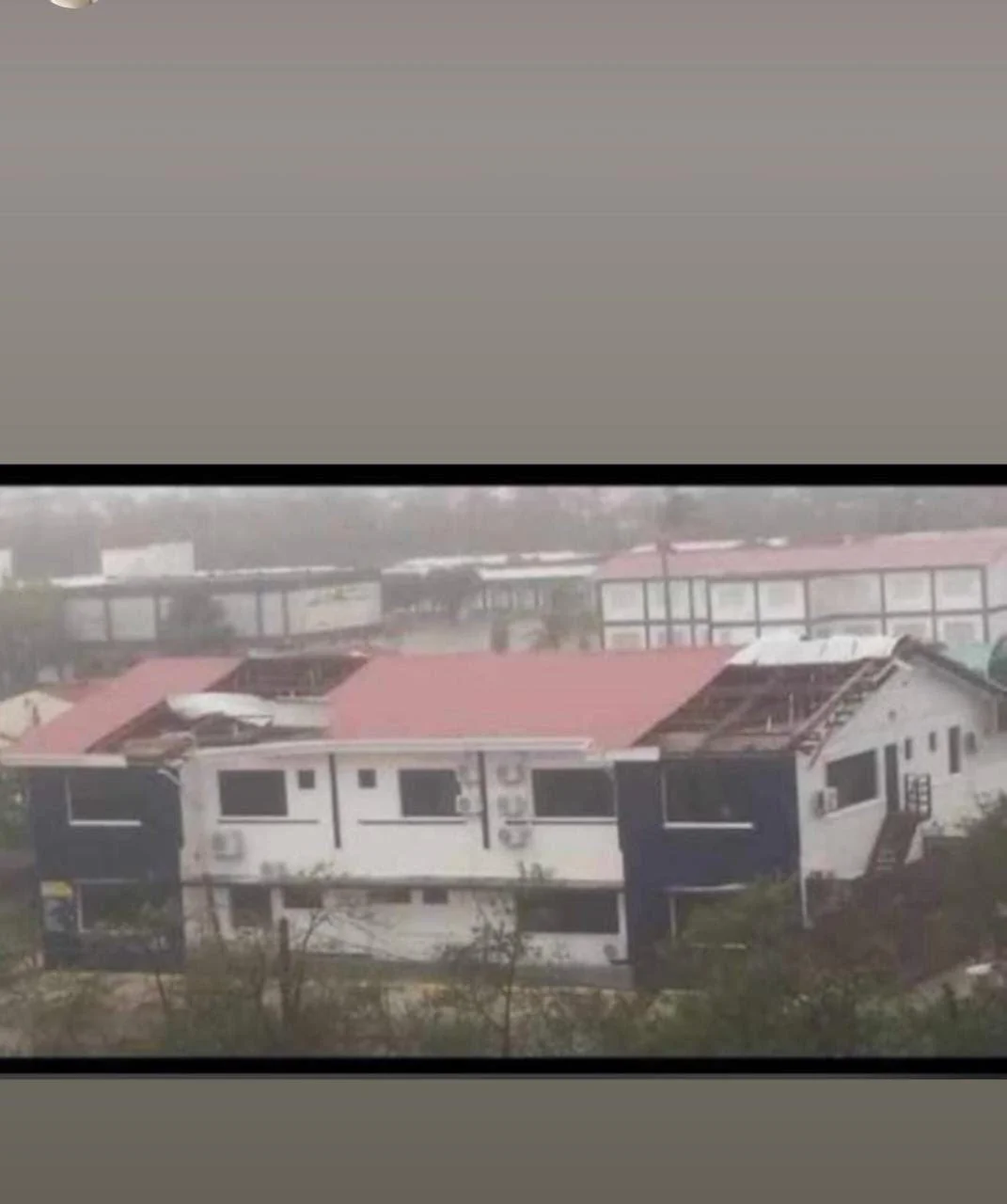
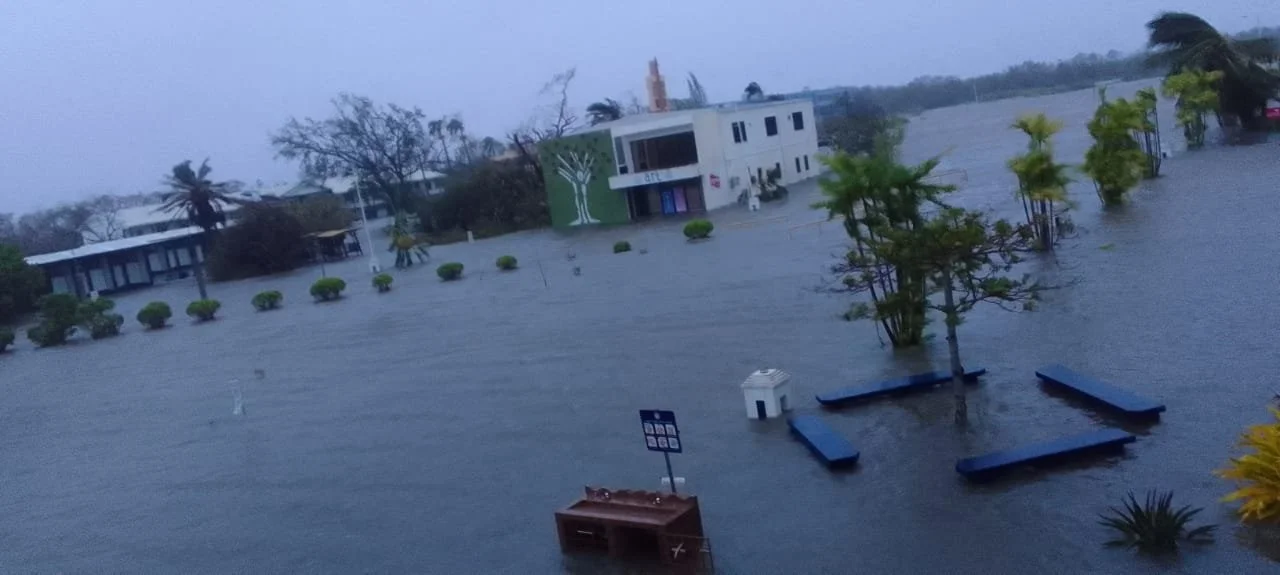
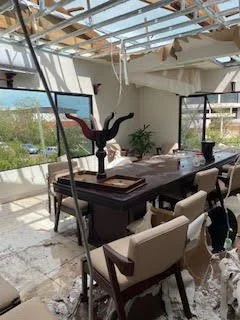
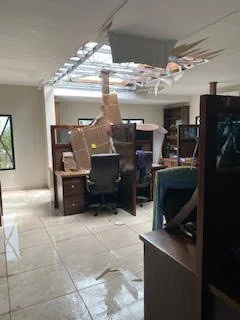
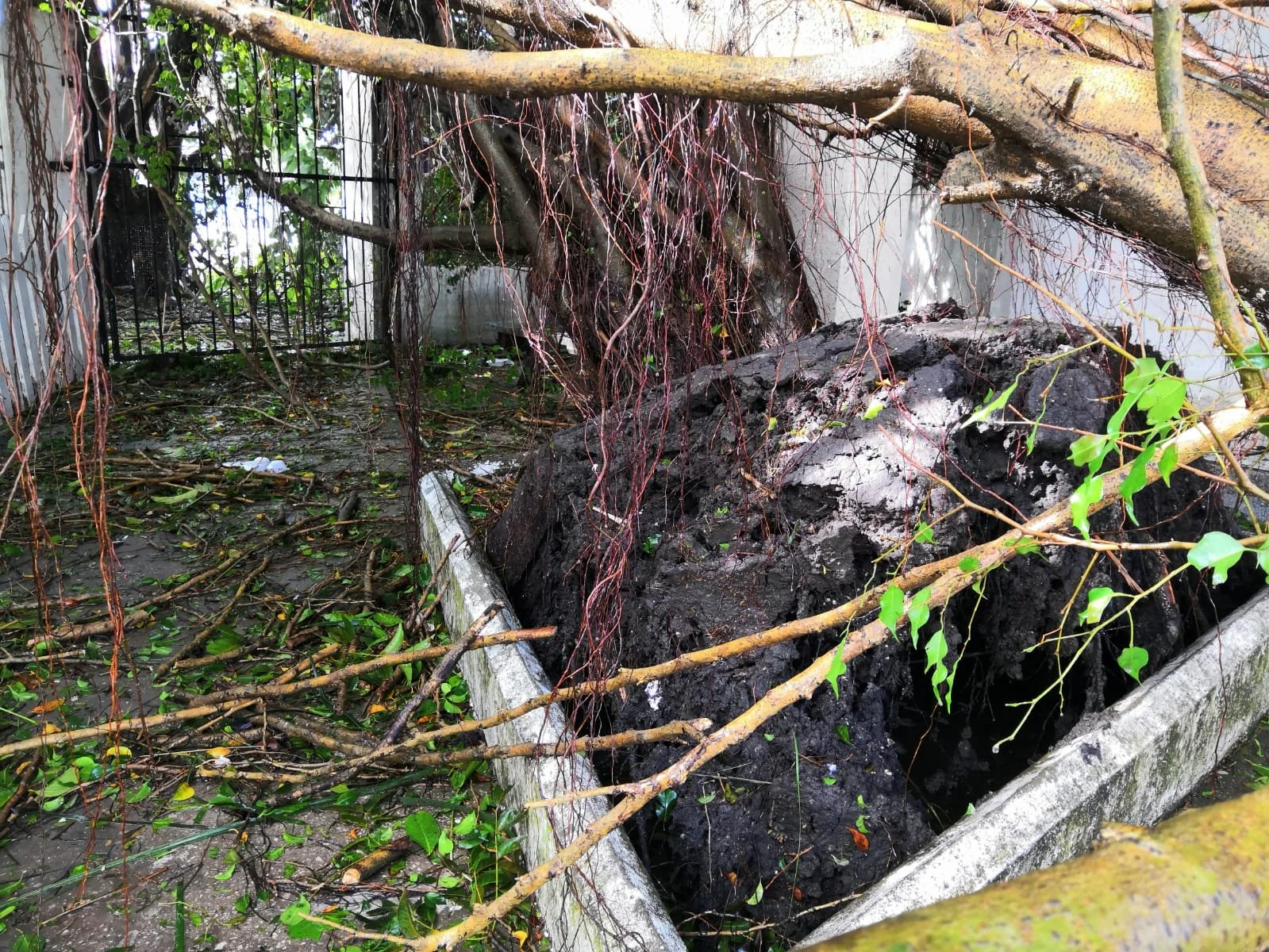
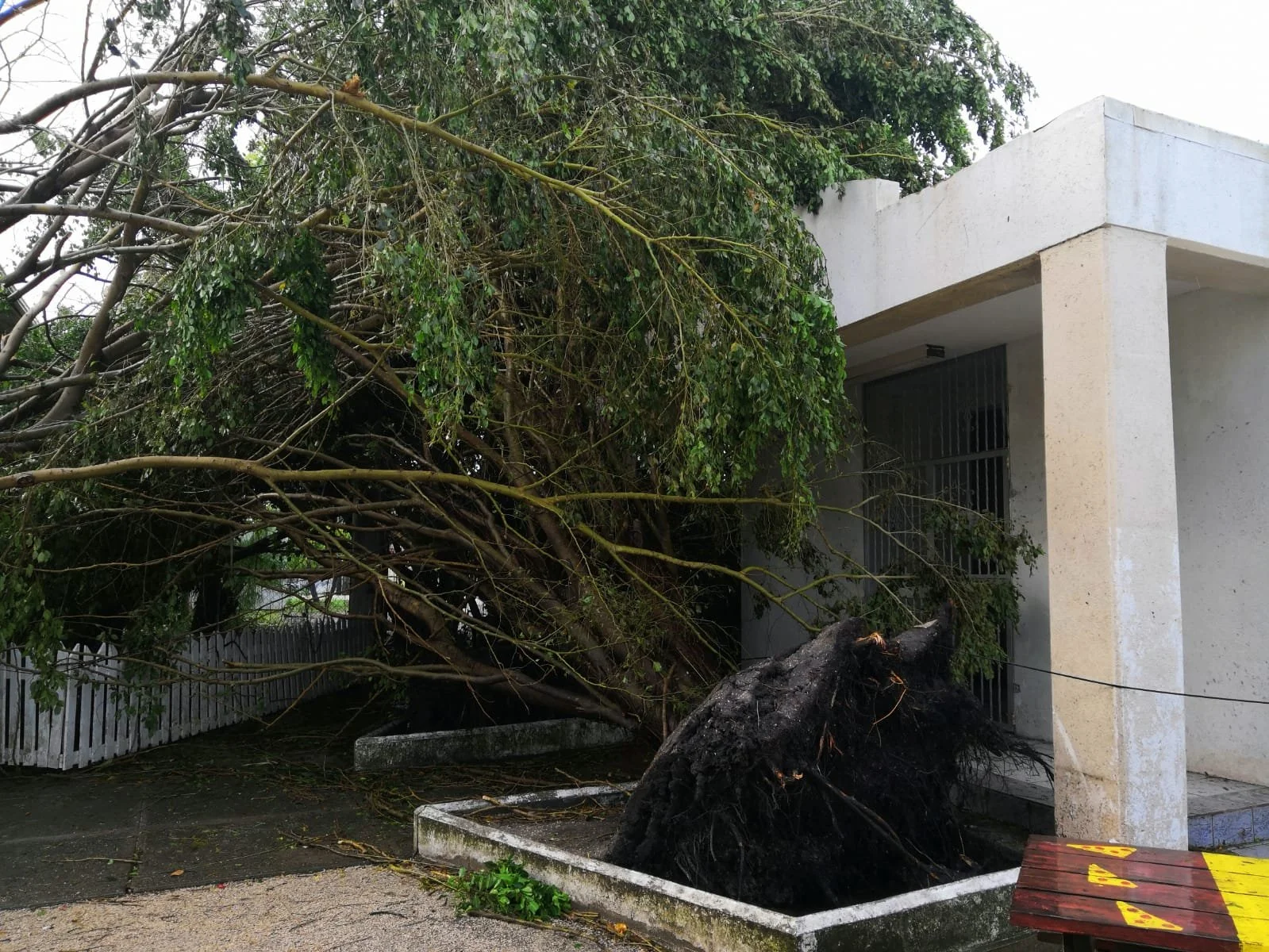
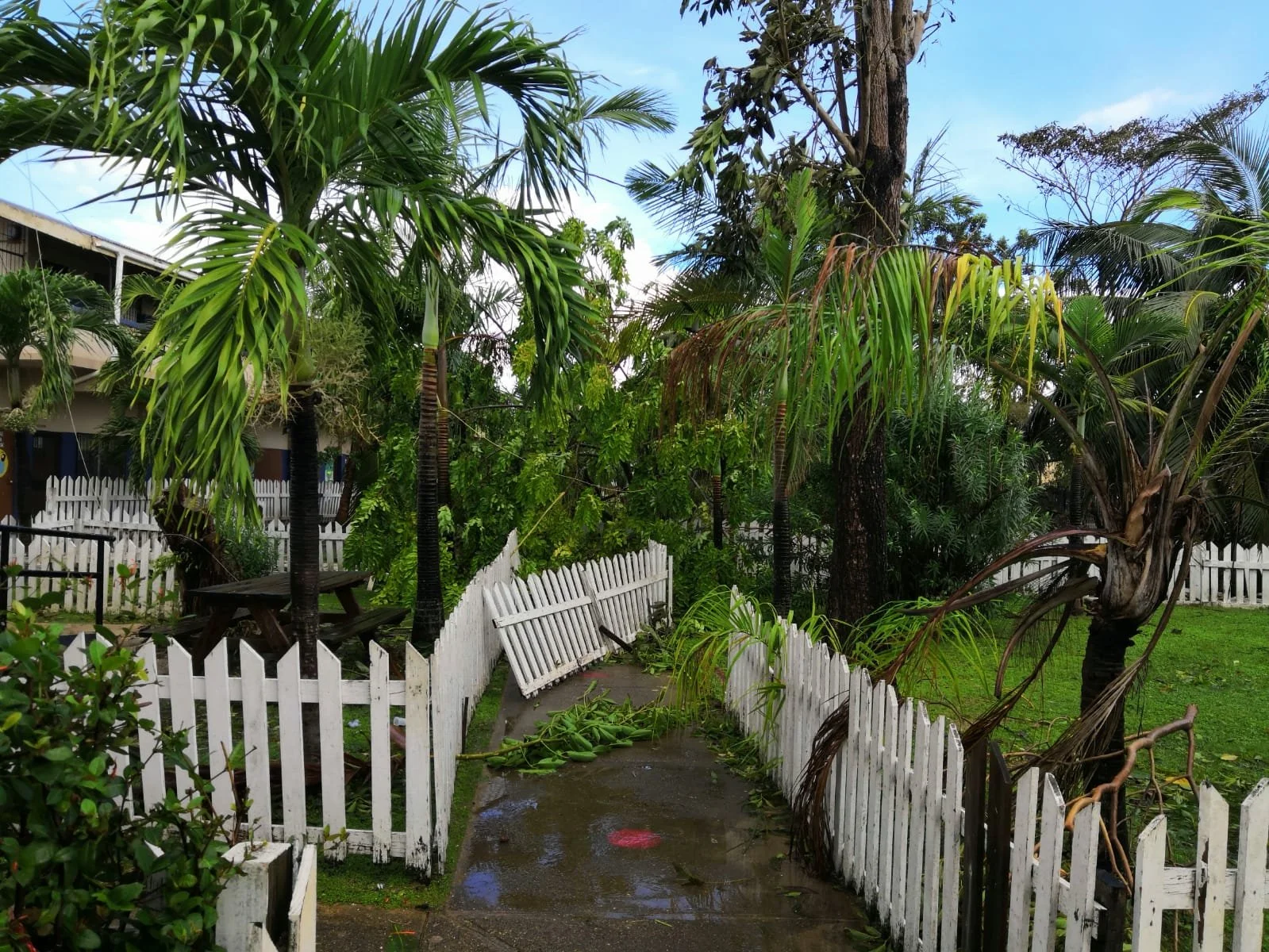
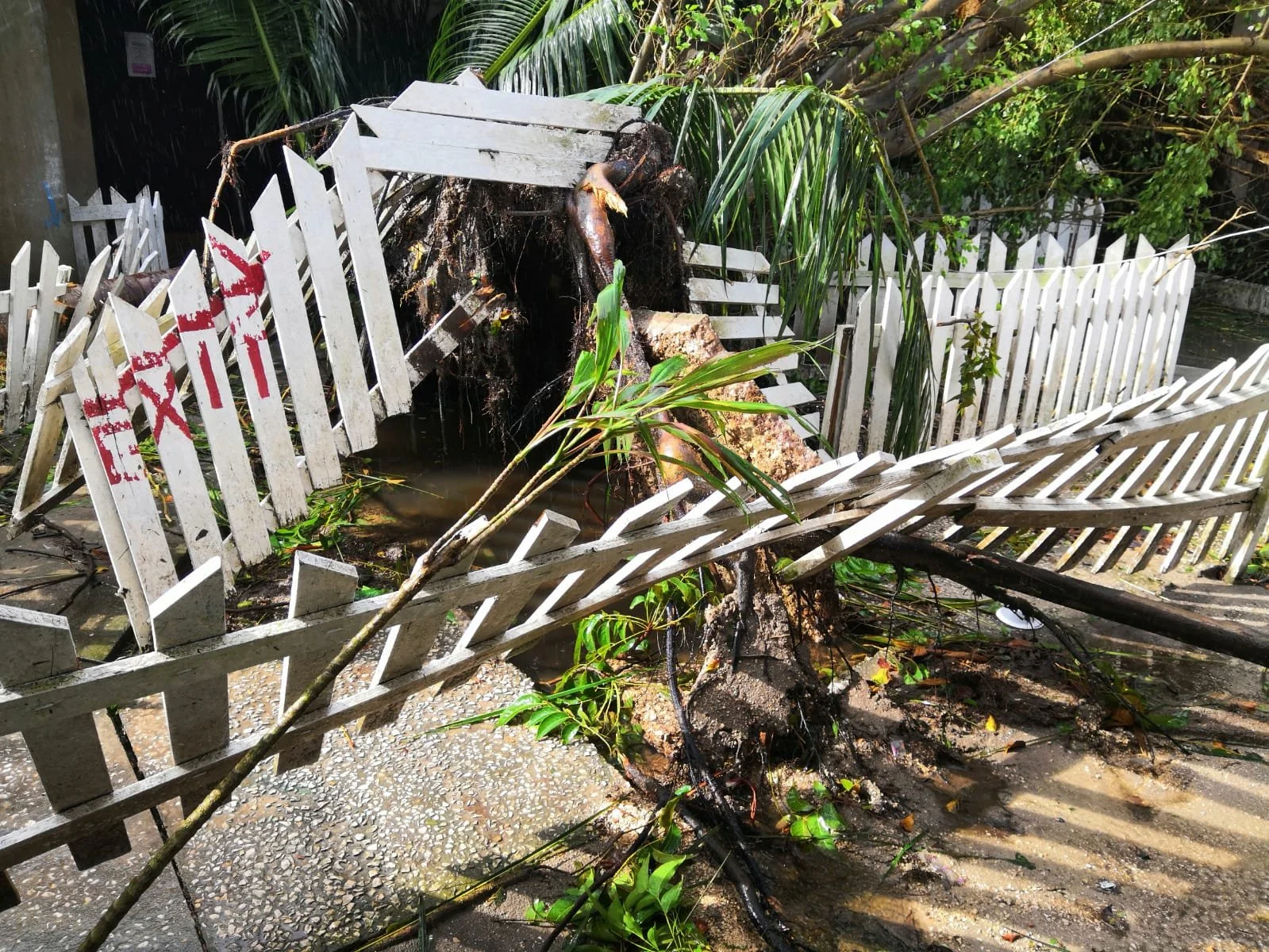
Updated Nov. 6, 2022 – Hurricane Lisa caused significant damage along the coast of the Central American country of Belize on Wednesday, Nov. 2, 2022, including to two of this province’s works in Belize City. Both St. Martin de Porres Parish and St. John’s College were hit hard, suffering  both wind and water damage.

Mirtha Alicia Peralta, president of St. John’s college, reported that four buildings at St. John’s College lost their roofs, resulting in major water damage to the interiors and destroying computer equipment and furniture. The campus lighting infrastructure and the security hut were completely destroyed, and the landscaping and outdoor furniture were also seriously impacted. There was flooding and electrical damage across the campus.

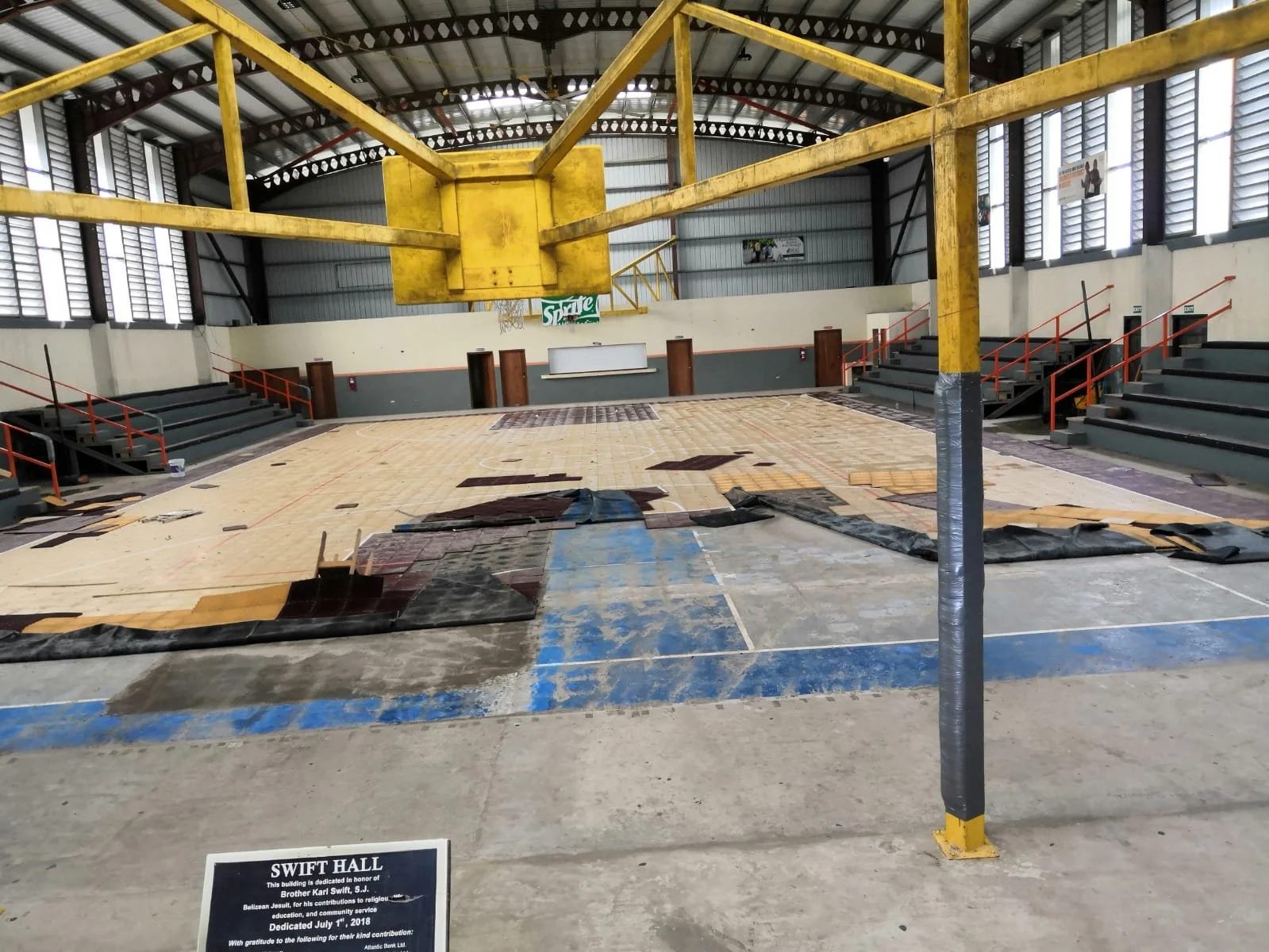
At the parish, the interior of Swift Hall, a multipurpose building, suffered major damage to the floor, windows and doors. Two large trees were felled, which tore up a sidewalk.

The province is accepting contributions to help recover from this storm. You can donate by clicking here or sending a check to the Jesuits USA Central and Southern Province at 4511 West Pine Blvd., St. Louis, MO 63108.

St. John’s College serves 2,000 students, divided between 700 boys at the high school and 1,200 students at the junior college,  and has many of whom were also severely impacted by the passage of Hurricane Lisa.

We give thanks to God that no lives were lost and for being part of a generous Ignatian Family.

Taking Counseling to the Classrooms!

By Tina Cuellar-Augustus, Director - Project HEAL

St. Martin de Porres Primary School teachers and staff attend a SEL workshop. Counseling programs at St. Martin’s have been extended to staff.

Project Heal launched its Life Skills Program in September 2020 - the first ever to be conducted countrywide at the primary school level in response to the pandemic and urgency to support students. These sessions were conducted virtually as distance learning was being enacted. Since January 2022, the program has been executed face-to-face.

The Life Skill program aims to equip students with positive social and emotional skills that increase self-awareness, self-control, and interpersonal skills, both in and out of the classroom. Currently, the program reaches approximately 72 students ages 10 – 12 years old. It covers topics like: self-esteem and positive self-talk, self-acceptance, emotions, decision making, grief and loss, making friends, and conflict resolution.

Each session, students engage in hands-on activities – like arts & crafts, experiments, and role-play to memorize the concepts.  The objective of the program is to decrease referrals for behavior-related issues and increase positive interaction between students, students and teachers, and - ultimately - to create a campus that is Social and Emotional Learning (SEL) friendly! 

This 2021-2022 academic year is the fourth of the Social Emotional Learning program, and it has evolved due to the pandemic. The focus has been to provide individual counseling services to all members of the administration and staff as they navigate uncertainties in their personal lives, challenges due to hybrid learning, and the salary decrease imposed by the government.

The need for individual counseling was reinforced by the results of a survey sent to teachers by the principal at the start of the academic year. 

Weekly contact is maintained with the teachers and administration via WhatsApp groups. Recently, the first in-person group workshop was held with the entire administration and teachers with full attendance and engagement. 

An additional consideration this fourth year has been to create a Social Emotional Tool Kit Manual to assist teachers with the transition of the children back into the classrooms. The manual provides step-by-step ideas, procedures, and resources that teachers can use to create safe, trauma-informed, and emotionally intelligent classrooms to help themselves and the students co-regulate through these difficult times.  The counseling team at Project HEAL has been an integral part of the creation of this manual and will be a part of the support system at the time of implementation. 

St. John’s College to become Four-Year University

By Tom Nagel

Decades in the making, St. John’s College (SJC) will become a four-year university offering bachelor’s degrees. American Magazine - The Jesuit Review reported the news on May 17.

Official approval came in October 2021. The first bachelor’s degrees are expected to be awarded in 2024. Founded in 1887, SJC has 1,200 two-year community college students today. SJC officials have sought government approval to become a four-year institution since 1981.

Weber Hall at SJC. Watercolor by Tom Nagel.

“Becoming a four-year school is going to continue SJC’s legacy and take it up a notch, because you have a lot of kids who cannot go abroad to get a four-year education, and now they can get high-quality Catholic education right here at home. It could be a game changer,” Father Brian Christopher, superior of the Jesuit community in Belize, told America Magazine.

SJC is a member of the Association of Jesuit Colleges and Universities - the only member outside of the US - which will play a large role in the new structure.

“We are blessed to be part of the Jesuit network,” Alice Peralta, SJC president, told America Magazine. She expects more U.S. Jesuit college students to spend semesters in Belize and vice-versa. The first bachelor’s degrees will be in social sciences, business, and computer science. SJC opened a satellite community college campus in Toledo District last year and is developing plans that fit that campus into the new four-year format. 

“We want to journey with the youth, showing them a spiritual pathway through education,” Peralta said of the developments and SJC’s mission.  

St. Martin de Porres Primary School is Alive Once Again

By Gina Fonesca

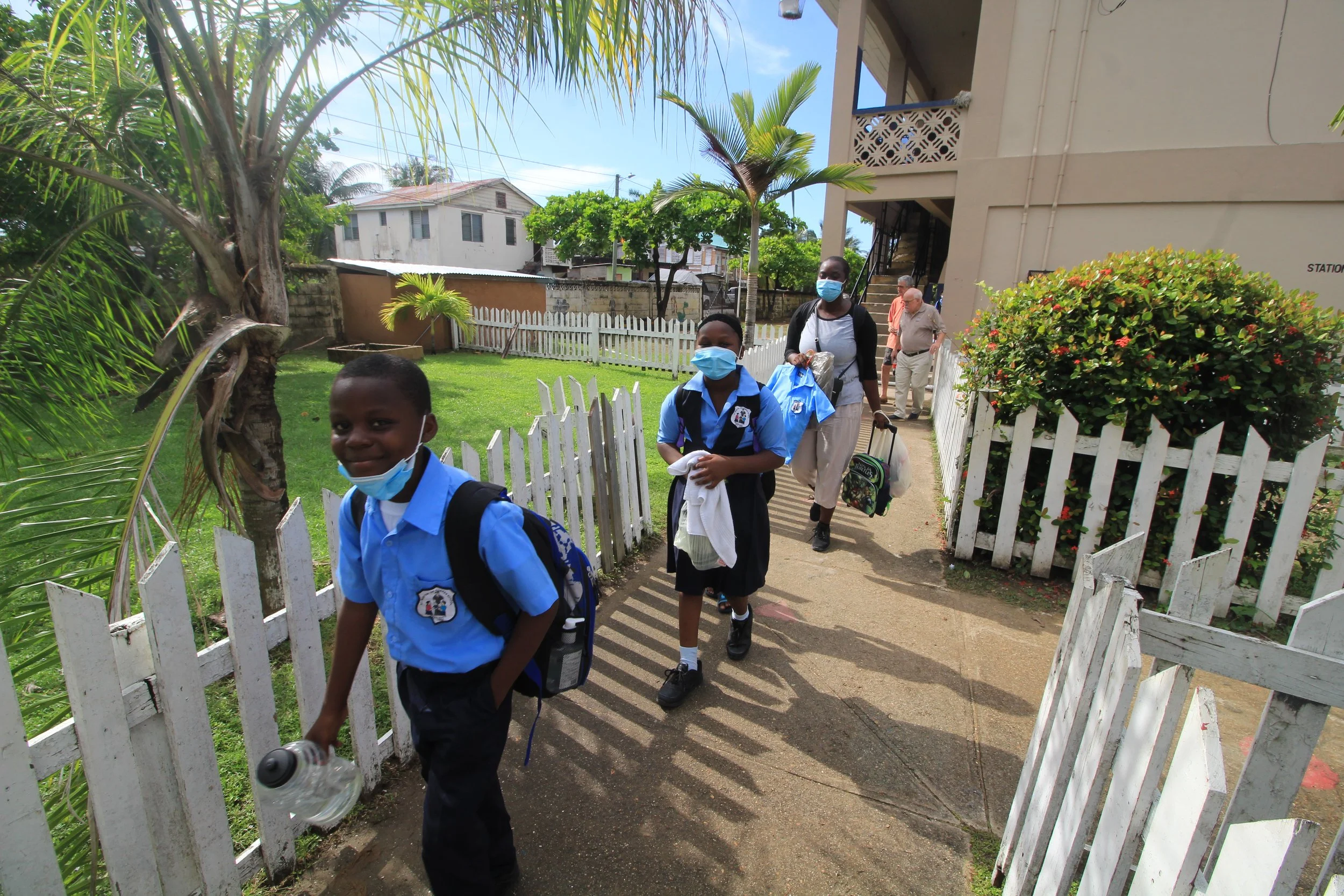
After almost two years of lockdown, on January 10, 2022, the St. Martin de Porres school compound came to life once again. The excitement was palpable. Everyone was relieved to be back on the road to normalcy. The school opened and implemented a shift system to safely accommodate the approved number of students in keeping with the country’s protocols, as put forth by the Ministry of Education.           

For St. Martin’s, this meant that half of the students would attend classes in the morning, and the other half would be on campus in the afternoon. This allowed for less exposure for both teachers and students, and for proper sanitization. So far, it has been working very well. The teachers and staff have been working diligently to teach the students the new protocols, and the students have been quite receptive and open to embracing this new normal. 

St. Martin students in March 2022.

The administration implemented an “integration plan” to reintroduce the students to the curriculum. This integration plan focuses on the important subjects such as Reading, Language, and Math, and it attempts to reinforce concepts that may have been missed during the months spent away from the classroom. The students have been responding positively. This will help everyone to be on the same level by the time the new school year begins.    

Another initiative underway is the high school application incentive for the graduating students. This initiative covers the application fees for students who wish to apply to high schools. We are hopeful that this will encourage our 63 Standard Six students to apply to high schools to continue their education.

The Project Heal counseling program is ongoing and continues to be instrumental as we reintegrate the students into the classroom setting, as it has not been easy for everyone to transition back to in person learning.  We are grateful to our counseling team who continue to work tirelessly and compassionately with our parents, students, and teachers. 

Since reopening our doors, the daily attendance has been constantly increasing. This is due in part to parents becoming more comfortable with sending their children back, as well as the consistent daily reports of lower number of Covid cases countrywide.   

As we celebrated Child Stimulation Month in March, we celebrated the opportunity to come together once again to watch firsthand as our children grow and develop at all levels in this “new normal environment”. We are ready for the challenges that lay ahead.  <

Trivia Night Raises $36,000 for Jesuit Apostolates in Belize

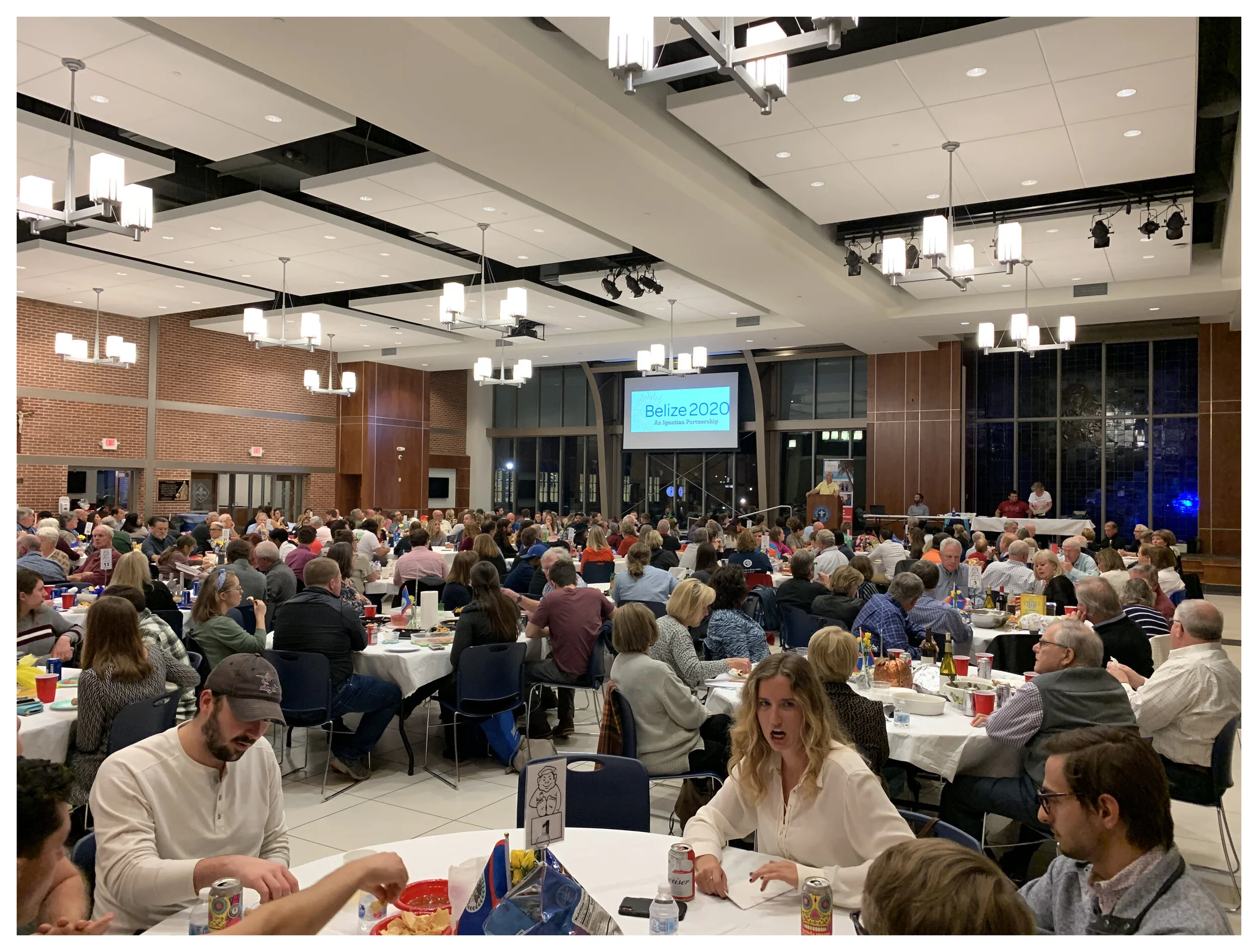
Thank you to everyone who turned out for the Belize 2020 Trivia Night on October 18! Held in the beautiful Si Commons at St. Louis University High School, the event drew 300 people for an evening of fun and fundraising to benefit Jesuit apostolates in Belize. A total of $36,000 was raised.

In addition to the competitive trivia contest, attendees participated in 50/50 drawings and other activities while sharing yummy snacks brought from home. One of the highlights of the evening was a raffle for a dinner with the Jesuits which raised $3,000!

The Belize 2020 Core Team is extremely grateful for all those who volunteered, gave so freely of their time and offered incredibly generous donations. Thank you!

Check out the gallery of images below for a sampling of the Trivia Night fun!

Belize 2020 Trivia Night!

Please support the work of our Jesuits and colleagues who serve the people of Belize. We are hosting a Belize 2020 Trivia Night to raise money for this important ministry. We hope that you will join us for a fun and profitable evening.

Saturday, October 19, 2019

Si Commons
St. Louis University High School

4970 Oakland Ave.
St. Louis, MO 63110
(Free parking in the lot adjacent to Si Commons)

Doors open at 6:00 pm with the trivia contest beginning at 7:00 pm.

  • Cash prizes for the top two trivia competitors

  • Beer, soda and water included with admission

  • Bring your own food/snacks

  • Mulligans 6 for $10

  • 50/50 drawings and much more

Sponsorships

All sponsorships include a table of 8 and recognition at the event
Platinum Level - $5,000
Gold Level - $2,500
Silver Level - $1,000

Event Tickets

Tables of 8 - $200
Individual Tickets - $25